
Posted in Different Books

are you blocking experiences?

Everyone seems to be talking about this – yet I recognize some of my readers (hi mom) may not read the same sources I do. For this reason, I wanted to share something important that’s being recognized (or affirmed) in recent publications. Jonathan Haidt, who is not a believer but considers himself “religion friendly”, is a social psychologist with a lot of research to back up what he’s saying. What is his newest book confirming that most of us have already been aware of? “..the smartphone-driven “great rewiring of childhood” is causing an “epidemic of mental illness.”

It’s been on my mind a lot lately, especially as different stories have hit major news outlets. Schools in Canada are banding together for lawsuits against social media companies. What’s their accusation? “They were reckless and malicious, manipulating the brain neurochemistry of young students, getting them hooked on social media platforms, and, in doing so, causing widespread damage and disruption to the education system.

Within a week of reading that story, I also read about schools in the US increasingly looking to hire “Chaplains”, in response to the current mental health crisis. I think it’s great that schools understand learning requires a safe environment, but also a “felt” safe environment, which means helping students cope with unprecedented levels of anxiety and depression.

But with schools in Canada, and hiring chaplains in the US, and a myriad of other responses to what is happening, it seems like we’re missing a major point. I think we’re missing it on purpose usually, because it’s a lot easier than owning our role. We’re pointing fingers at others, or employing others and tasking them with bringing healing, while abdicating our role in any of this. The truth is – each of us has agency in responding to the problem. And it is a problem. Despite what those who profit from these devices and services may say in defense. I’m generally the opposite of an alarmist (ask my wife), and I’m immediately skeptical of anything someone says to try and illicit an urgent response. So I’ll wait a moment while you Google as needed to find the stats and confirm what I’m saying here. The kids are not okay.

But there is hope.

Remember what it was like growing up in a world where loving adults were placed in positions of authority and care over children?

Whether or not that was your reality, that does seem to be the intent. Whether you’re a believer who credits this within the grand design of God, or whether you’re a non-believer who credits this within the survival of the fittest – there’s a truth to it. Those who have survived longer are placed in positions of guidance and authority over those still developing a pre-frontal cortex.

Every time we’ve experienced this sort of “learning” in modern times, we’ve instituted controls to protect those who are most vulnerable because of their age. We’ve set minimum ages for drinking or smoking, because these substances are harmful and addictive. It wasn’t immediate, and there were difficult moments in instituting these controls, but they were worth the struggle. Our children, and the future generations of healthy adults who will help lead this world into a future of flourishing – are worth it.

So what are the 4 primary recommendations being given by Haidt, as one small but tangible way to make a major impact on the mental health of our youth (and subsequently help foster a tomorrow where adults are mentally/emotionally well-prepared)? Here they are:

  1. No smartphones before High School age. (Parents/guardians – we can do this!)
  2. No social media before age 16 (and hold companies accountable for this, in the same way stores are accountable for checking ID’s before sales of alcohol/tobacco).
  3. No phones in schools. (Seriously, why is this one so hard to see?)
  4. Prioritizing real-world play and independence.

If we took this list seriously, it would make a major impact immediately. If homes and places of education adopted these as norms – students wouldn’t feel the pressure to “keep up/plugged in” simply because their friends were. Sure, most youth would go through a difficult withdrawal phase. We’d have to adapt to new routines, and trust that we could all survive. Everyone reach out to your favorite helicopter parent, and give them extra affirmation – making your kids “unreachable” during the school day is actually good parenting.

One thing Haidt says over and over again, is that these devices are “Experience Blockers”. His book even includes a chapter which seems significant for a nonbeliever to include. The importance of a shared religious experience, or spiritual community that we are committed to, can make such an important impact on fostering a strength that we and our children both need. Of course it should be obvious by this point – as adults, we should be leaving our phones behind (or at least turning them off, not just silencing them) whenever we enter church on Sunday mornings (and other times of devotion/reading/prayer throughout the week).

Yes, devices offer us significant experiences as well. But this doesn’t mean they’re 100% without potential for great damage. There are plenty more links and books I could suggest, but I think the best evidence would simply be to tell you – go unplug from devices for the next 60 minutes. See how you feel afterward. Don’t we think this is needed more, across the generations?
Posted in Different Books, Uncategorized

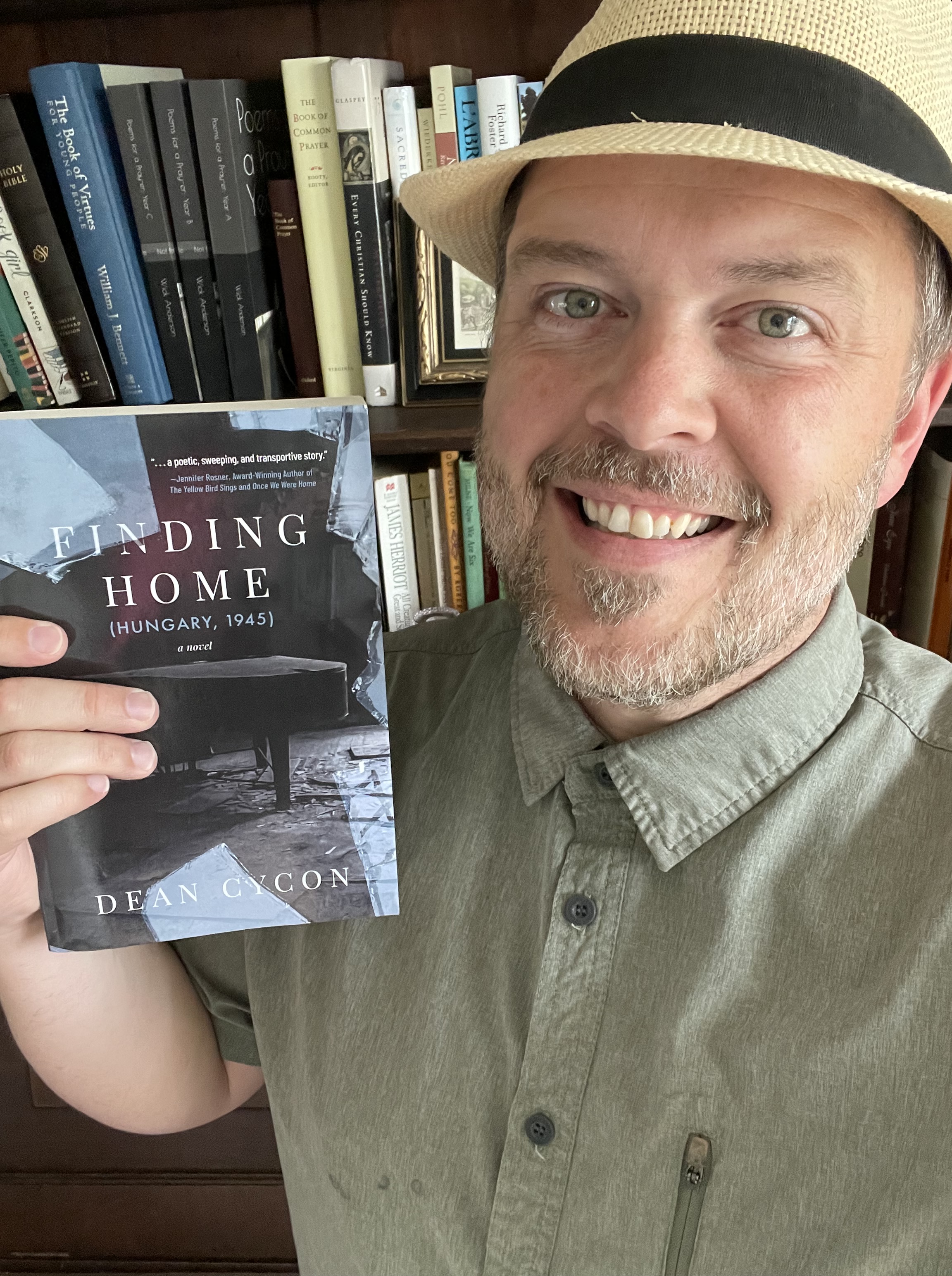
Finding Home (book review)

From the book cover: “For nine months in Auschwitz, eighteen-year-old Eva Fleiss clung to sanity by playing piano on imaginary keyboards. After liberation, Eva and the five remaining Jews of Laszlo, Hungary, journey home, seeking to restart their lives. Yet the town that deported them is not ready to embrace their return. Their former neighbors and friends resist relinquishing their newfound status and property, and they struggle with their roles as perpetrators, enablers, and bystanders during the Holocaust.

Longing for connection to her old life, Eva agrees to clean her former home, now the mayor’s home, in return for practice time on her piano. As her profound experiences allow her to access music at a depth she didn’t know existed, Eva’s performances begin to affect those around her-with unexpected consequences.”

Quote from the book: “The women in the camp said Jews mitigate the distress of loneliness through communal compassion, but except for the baker Eva didn’t know any of these men. What did she represent to them? A lost daughter or sister? A community that no longer existed? She didn’t want to be their Jewish hope for the future, she didn’t want to be anybody’s anything. Maybe she was being selfish, but the weight of her own grief was hard enough to bear without being responsible for anyone else’s happiness.”

Here we have just one example of the beauty within “Finding Home”, a historical fiction recently released, written by champion of great coffee, Dean Cycon. Even with so many books written that involve this tragedy of human history, this book stands out as a unique invitation to know the hearts of a particular experience. His research and his own heart shine through over and over again throughout the book, as he captures and shares well what it may be like from the perspective of each character. I hesitate to write too much, because I really don’t want to spoil anything. Having lived in Hungary, and having grandparents who fled Jewish persecution years before The Holocaust, the book hit home several times. You are invited to wrestle with God in a faith that becomes more than words. You can imagine strolling the streets of a post-WWII Hungarian village. You are introduced to cultures and worlds you knew existed, but always from a distance. You can imagine the difficult relationships a young woman would need to navigate as she returns, infinitely wounded, to a place where wounds have become the way of life.

Thankfully, you can also hear whispers of hope and healing throughout. Even in the darkest of nights, a small light shines and can make all the difference. The power of music to transcend our woundedness, even as it gives voice to a healing lament, is a moving part of this story – and our world still today. Cycon also does an amazing job of “explaining” elements of both Jewish faith and classical musicianship in ways that help you feel invited – even if you’re an “outsider” in these areas usually.

As with any book involving the immense suffering and injustice of The Holocaust, I would use discretion in recommending to younger readers. Most everything about this topic should offend us. Parents – read it first, and decide for yourself. But there is nothing offensive included gratuitously.

I highly recommend reading this book, especially while sipping a cup or 10 of great coffee, and enjoying a Kakaós Csiga as well. Caution: Seriously, you will end up wanting to visit Budapest after reading this book. If that happens, let me know – I’ve got some great friends in Hungary who would love to help you plan your stay. Until then, “Olvassa el ezt a könyvet, és Isten áldja meg.”

Posted in Different Books, Spoken Word, Uncategorized

I want to share a few poems with you…

..well, over 1,000 poems actually. Let me explain.

It was around Advent 2019, and we had moved to Hungary early that year. New routines were being established as we settled into this season of serving as missionaries. Without the “church office” I’d grown used to having, most of my office work and even personal moments of study/prayer were happening in our apartment. I found some of the things I valued and wanted to be disciplined to include in my day became (as anything can) items to “check off the list”. One of those things was reading scripture on a daily basis, unrelated to “work”.

So as an experiment, I tried to write in response to the Lectionary passage from any given day. (The “Lectionary” is a set of daily scripture readings, spanning a 3-year cycle, used by many Christian churches globally. Each day’s readings usually include an Old Testament passage, a Psalm, and a New Testament passage. I love using this cycle, knowing that many of God’s children around the world are feasting on the same heart of God revealed in those same words on any particular day/week.) To write in response to all three passages, uniting them in a “theme” of some sort seemed a bit forced. I decided to choose one of the three passages each day and write a poem that invited my heart to consider a prayerful response. I enjoyed these first days of experimentation so much, I set a goal of doing this for 3 years which would take me through the entire “Revised Common Lectionary”.

I’ve always loved poetry, and the impact words can have on my heart and mind. I also love thinking and studying scriptures or theology, and have even thought about writing a book for public consumption. But more than once I’ve set out to write a book only to realize what I’m saying has already been said by someone who set it down in words quite well. But the playground of poetry has always been one I feel well-equipped to enjoy. I’m encouraged in this direction every time I find a poem I’d previously written, and feel moved by the words there. Sometimes it’s as if I’m a different person than the man who wrote the poem originally, and I suppose it is true. We are all constantly becoming the person we will be tomorrow while seeking to exist faithfully in the life we’re invited by today.

Not long into this endeavor, the global pandemic threw all kinds of ordered life into disorder, and I found the comfort and routine of writing these poems each day a familiar invitation. They (or rather, the God who met with me in these moments) became a source of stability and a reminder of God’s faithfulness during a time when so much of the world seemed to be asking “What can we still depend on?” As I look back on these three volumes, I’m thankful for the heart they continued to shape in me. I’m thankful for the ways God met with me in these moments. I don’t think many of them were individually life-altering. Rather, it’s the consistent presence and invitation to be Loved within His story that continues to shape my heart in response.

So here we are, having arrived at a point where all three years of poetry are available to the public. I’ve “self-published” them, not because I don’t believe in the power of publishing houses with built-in audiences and powerful stamps of approval, but because I know it takes work/marketing to pursue these roads. If anyone is interested in doing something with them – please let me know (while I continue pastoring full-time, of course). But this was the easiest path toward sharing them with whoever may be interested and preserving them for my kids to read their kids at family prayer times (no pressure, kids). Each book has slightly more than 365 poems included, which makes the total poetry available over 1,000 poems easily. I’ve given them the title “Poems for a Pray-er”, which may confuse some people. The hyphen indicates these are not just poems to be used as a “prayer”, but rather used by someone who wants to pray. Someone who wants to pray, I would refer to here as a “pray-er”. As I confess in each introduction – these are not all incredible poems. In fact, some of them should be re-written. None of them were labored over for long periods of time. But each are unique and written in that moment of response where I sought to hear from and respond to the heart of God revealed in scripture.

For me, there’s an obvious question of “What now?” For my personal times of prayer and scripture, I’ve begun to enjoy reading the Bible on its own again. I still use the lectionary to determine which passages to read most days. I love writing longer “Spoken Word” poetry, and will probably write some new words in this direction from time to time. I look forward to how God continues to use and redirect my passion for words and His Word.

If poems aren’t your thing, I want to encourage you – whatever your “thing” is, experiment with it. But in your experimenting and loving response to a mysteriously infinite God, examine where you might be “checking things off the list”, and ask God if He might delight in a new approach there. You may find that some methods actually retain their effectiveness (as a “Free Method-ist”, I definitely agree!), so don’t be afraid if some patterns stick for years, or even a lifetime. Whatever it looks like, may our lives continue to be shaped and reshaped daily in the Love God has revealed to us in Jesus Christ, empowered even today by His Spirit…