Posted in Different Moments, Uncategorized

S’more.

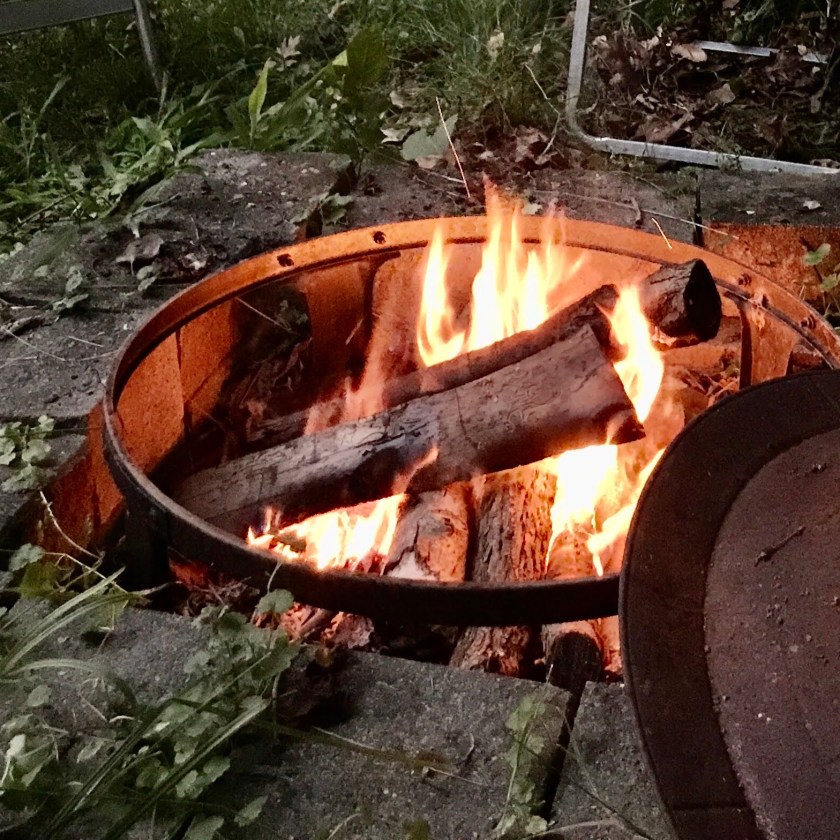
I sit back in my generic blue camping chair, admiring the flames as they begin to crackle. Their orange tongues just barely flicking up the surface of the larger wood now. Within a few minutes, the logs are completely engulfed in fire, preparing the logs for the process for which they’ve been set ablaze – s’mores. But everyone knows you don’t cook a marshmallow on a raging fire. You cook it slow, roasted while carefully hovering over the surface of the coals that have seen enough fire to whisper their memories to the sweet sugary fluff suspended over their heads.

For now, we wait and we watch.

We listen to the sounds of cicadas bellowing overhead, inviting us to incline not only our ears, but our eyes in their direction. So up we look, gazing into the overarching umbrella of the upper leaves, swaying to and fro with the evening breeze. The cicadas, are there tens or thousands? Loud enough to drown out the worries of an earlier hour, and yet also loud enough to keep you from thinking clearly about tomorrow. All we are allowed to be aware of is this present moment. The sunlight flickers from some distant dusk still trying to promise it will return again tomorrow, but the light is too quiet to hear above the shadows of this moment.

We take a deep breath, and close our eyes.

Sight becomes unnecessary for now, as the sting of the smoke begs us for some brief respite. We smell the fire, and think for a split second about the need to do laundry later. We push such thoughts aside – they are not helpful here. Exhaling slowly, eyes closed, in this moment we’re able to enjoy the cool breeze tempered by the rising flames nearby. We feel warmth, even as we are cooled. The cicadas screaming such a noise that anywhere else would be instant annoyance, and yet here and now it is a late summertime symphony, with front row privileges.

We turn our attention again to the flames.

The wood is dry enough to embrace the fire quickly as family, welcoming the flames deep within, and crackling in ways that evoke a thousand previous campfires all at once. A sound that in many other moments would stir fear and rising anxiety – here in this place, finding a glad reception as memories of gathering close to beloved friends and family are stirred. Turning through pages of mental Polaroids, the album turns to reveal bales of hay with more friends than should be safely balanced, somehow comfortably positioned with smiles warm enough to make the pumpkins seem spiced.

As time passes, the mature coals beckon to be used as God intended.

I load the marshmallows, fatherly skills expertly developed for such a moment. They are loaded one at a time, two, three, four for this round. I watch the youngest child too excited to let dad help, plunge her mallow straight into the flames, with shrieks of delight. She doesn’t care for culinary perfection – she wants to see the flames, taste the burn among the chocolate graham, and return to playing with fireflies in the grass. Her older sisters have learned to trust their father, and the value of a well-roasted marshmallow. Turning my tines slowly, almost too far from the source to be perceptively active in my endeavor – nevertheless, heating from the outside in. Showing no external signs of heat absorption, time passes. The white turns slowly as I consider the source of heat actively. After a time, you notice the mallow begin to droop, until it seems destined to fall right off the metal fork. Dipping dangerously close to the heat, I caramelize the exterior just enough to give a roasted identity before offering one to each of my girls who stand nearby, plates ready. S’more one. S’more two. S’more three. One mallow left, and no more plates beckoning to be filled. Smiling, I gently remove the expertly roasted marshmallow myself – no graham or chocolate required.

I’ve discovered my mouth is large enough to fit an entire roasted Jet-Puffed Marshmallow safely.

I enjoy the thin shell-like exterior on my tongue, before closing my mouth slowly. The gooey center oozing in every direction, I examine it slowly to satisfy my pride. Yes, I determine. It was roasted fully to the center, leaving no solid center behind. I smile, slowly enjoying the sweetness until all has been swallowed. The cicadas are now singing a song of appreciation for such adept roasting abilities. The sun has disappeared long ago, and the bats are now noticeable in the dancing light of the flames still leftover. I place another log on the fire, breathing slowly while the smoke flows momentarily in another direction. Tomorrow there is more to do.

But for now, I believe I’ll have s’more…

Posted in Different Books, Different Scriptures

Promoting Relationship…

As a pastor, I am always wanting to grow in my understanding of relationships. The psychology, sociology, and neurology that go into the ways we relate to one another, ourselves, and even the ways we pursue a relationship with God are of significant value.

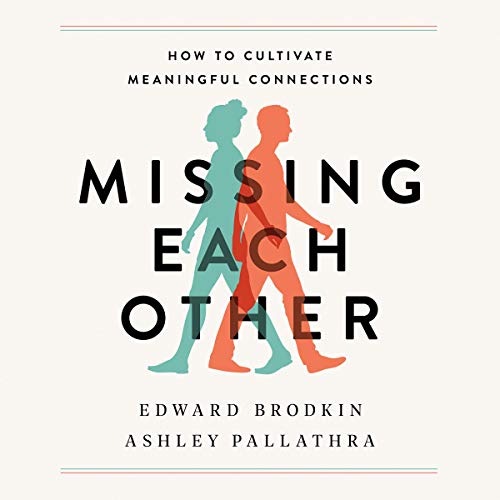
Presently, that means I’m reading a book called “Missing Each Other: How to Cultivate Meaningful Connections”. One of the technology books I read with our older daughters this past year talked about the importance of face to face interactions in terms of building healthy relationships. It ranked the strength of communication styles for building a deepened connection, and texting (a primary form of communication for most of us) was toward the bottom, under phone calls, video chats (another primary form under COVID), and of course the number one – face to face, in person, conversation.

With such a low amount of connecting in person during the past couple of years, it’s no wonder that the worlds of psychology, sociology, and neurology are paying attention also, and figuring out how to help people understand (and of course, I realize, capitalize on this moment for profit-making also). Whether you’re an extrovert or an introvert, you’ve experienced loneliness during the past couple of years, and if their research for human relationships holds similar for our relationship with God (my guess is, there are definitely connections), you might be feeling a bit disconnected from the presence of God as well.

One of the basic premises of the book, is that their research shows a fundamental part of building more meaningful connections is this element called “Attunement”. They break it down into four components: “relaxed awareness, listening, understanding, and mutual responsiveness.” The book goes into exploring these components, offering ways to become more aware, research to understand & improve each area, and exercises they have found to be helpful. Of course, it’s written for all people, and not a “religious” book. You won’t find them suggesting meditation on scripture, quiet breath-prayer/prayer walks, cultivating an awareness of God’s presence, etc. But they still offer some helpful insight, which can be adapted as needed.

Of particular note neurologically, is the research on how the hypothalamic-pituitary-adrenal (HPA) system responds to stress by releasing hormones, “including cortisol (often considered the body’s main stress hormone)”. The authors note that “experiments conducted at McGill University have shown that a stress response involving cortisol release can block a person’s emotional empathy for another person.” As we look at our culture today, especially the promotion of anxiety and stress by those who profit from our attention, we can easily see one of their conclusions then: “modern human culture has brought us a variety of long-term worries and stresses, and chronic activation of our bodies’ stress systems can have negative effects on our physical health, as Sapolsky points out, and can also have negative effects on our ability to tune in and connect to each other. This continual activation of the stress systems can promote a vicious cycle as stress increases a sense of disconnection; and being isolated and disconnected, in turn, increases stress.”

As a pastor, it helps to be aware that people are coming to church, and to life in general, with a decreased ability to form or participate in relationships with empathy. It also helps me to understand that simply praying “Lord, help us all have decreased levels of cortisol.” is not a faithful response to the understanding God has given us about how we’ve been created. As the authors write, “the activity of the PNS (parasympathetic nervous system) can reduce the activity of the HPA system.”

So what can I do to help activate and strengthen the activity of the PNS?  Dr. Stephen W. Porges stresses the importance of the “polyvagal theory”, as his research has found that the vagus nerve (which runs from our brain stem down into the abdomen, and is a major nerve of the PNS) can be calmed purposefully in several ways (here are some examples). One of the easiest ways, as we stand in the front of our churches in a moment of prayer or worship, aware of such things – is to slow our speech, model deep breaths, and even invite our people to pay attention to their own breathing. To pause and take a deep breath not only allows us to prayerfully consider what words to say next, it is also allowing a holy pause which can allow our PNS to wash our minds with responses that reduce cortisol and raise levels of oxytocin (a “neuropeptide involved in social bonding…including feelings of trust, generosity, empathy, and understanding.”)

It also means, as I encourage people young and old to spend personal time with God – I should emphasize that such time with God will be deepened by awareness of our breathing and body. It’s not as helpful to “dip in and out” of a 5 minute devotional, forcing God to connect in the time we give Him. We will improve and deepen our moments with God by finding ways to relax, de-stress, and become more physically attuned to our own emotional state as we move into His presence.

May you take a moment to breathe slow today, finding ways to turn away from the anxieties and stresses (even legitimate ones), knowing that purposefully embracing patterns of Sabbath and physical peace allow our relationships with others, with ourselves, and even with God to flourish in new and deeper ways…

 ‘Come to me, all you that are weary and are carrying heavy burdens,
and I will give you rest.’ – Jesus (Matthew 11:28)

Posted in Uncategorized

At the Passing of Vivian Dake

A poem written by Rev. S.K.Wheatlake in 1892, in memory of Rev. Vivian Dake, who died while serving in Africa. It seems a great poem to be read at the untimely passing of anyone serving the Kingdom of Jesus…

He fainted on the battlefield,
Secure behind Faith’s trusty shield;
With Armor on the warrior fail,
Unsmitten by the darts of hell.

He fell beneath meridian sun,
At noon a full days work was done.
No more he treads the battleground,
No more the cross – he wears the crown.

No more he’ll join us in the fight
Against the wrong for God and right.
Close up the breach in which he stood,
Be bold to strike or die for God.

Oft we were blessed, ‘mid battle roar,
To hear him shout his victories o‘er,
And when his sword flashed forth the light,
We waxed more valiant in the fight.

Gird up your loins. No longer weep.
God giveth His beloved sleep.
Soon far beyond the battle fray,
We’ll meet on coronation day.

But Hark! Hear ye that battle cry,
Stand firm, the hellish foe is nigh;
With Spirit’s sword and victor’s song,
Quit you like men. In God be strong.