
Posted in Different Scriptures

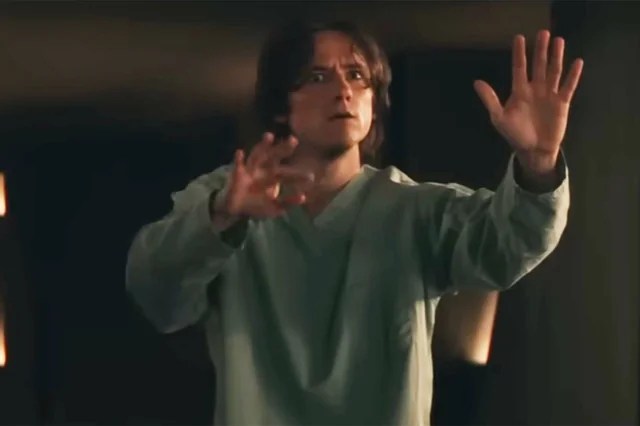
eyes opened to holiness

In Acts 26:18, Paul is telling his story of meeting the resurrected Jesus on the road to persecute Christians in Damascus. Jesus tells him from now on, all are sanctified (made holy/set apart) by faith in Jesus. Not by our behavior, although putting our faith in Jesus necessarily involves our behavior. Just like putting our faith in a chair takes shape as we lower ourselves to rest fully on the foundation a chair’s seat can provide. If I told you I had faith in a particular chair, but you never saw me sit in it – you may begin to wonder if what I was saying was true. In the same way, we are not made holy by our performance, or by a list of what we do or don’t do. But our faith becomes reality as we live out the Lordship of Jesus and His Ways over and above what we might desire or what our world proclaims to be a desirable or profitable way. As we abide in Jesus, we are “sanctified”. What does that mean?

Let’s look at where else this same word is used. One of the most familiar places is in the Lord’s prayer in Matthew 6:9, as we begin “Our Father in heaven, Holy is Your name.” Holy is your reputation. God is set apart and “otherly”. God is pure. The word is also used in the Old Testament, to put limits around Mount Sinai because it’s Holy (Ex. 19:23) or to “Remember the Sabbath day and keep it Holy.” (Ex. 20:8). It’s also used in Ezekiel 37:28, as God speaks through His prophet to say, “Then the nations shall know that I the Lord sanctify Israel (“my people”), when my sanctuary (“dwelling place”) is among them forever.” Here we see why so many Jews might be upset with Paul to the point of wanting him silenced.

Paul declares that He has been obedient to the vision ever since. Not just a vision, but a “heavenly vision”. This is not something he dreamed on his own, or something he decided, but the words of Jesus directly, who spoke in Hebrew and is Lord. He declared those same words in Damascus, and then throughout Jerusalem, and Judea, and out into the Gentile world. Remember the words of Jesus Luke gave us at the beginning of Acts 1:8? “But you will receive power when the Holy Spirit has come upon you, and you will be my witnesses in Jerusalem, in all Judea and Samaria, and to the ends of the earth.”

Paul went out with this message from Jesus into the Gentile world, sharing the gospel – the “good news” that ALL could now repent, all could now turn from darkness to light, be brought into the authority of God, receive forgiveness from their sins, and be made Holy by faith in Jesus.

He not only encouraged them to repent intellectually, acknowledging the truth internally. He encouraged them to live in ways that were consistent with repentance. If we come to Jesus and claim all the freedoms and power in His name, but then live according to the same ways and patterns and oppressive forces that bound us previously – this is not a life that has turned fully toward the authority and presence of Jesus by His Spirit here and now.

But, Paul says, it was this bold message among the gentiles that caused the Jews to seize him and try to kill him. God has protected him up until this point, so that he can share his testimony with all who would listen in those moments – both those with lots of power, and even those who had no power. There were probably servants, and maybe even other prisoners in the room waiting for their chance to defend themselves. This “good news” was meant to be heard, and was powerfully available as the Truth for everyone – no matter who they were.

He highlights the impact of his message one more time – the reason he is being accused, is the same reason he defends himself. This is not something outside of Judaism, or a new faith he’s inventing. This was spoken of by the prophets and Moses long ago. The Messiah, Christ, must suffer, and being the first to rise from the dead, he would proclaim light both to our people and to the gentiles. This section of Acts 26 continues to speak of moving from darkness to light.

In the resurrection of Jesus, the light of New Creation shines on both Jews and Gentiles. As Peter declared in Acts 15:9, “in cleansing their (the Gentiles) hearts by faith he has made no distinction between them and us.”

Paul has been saying, the same holiness – the same “set apart”-ness that was only reserved for the Jewish people previously, was now branching out to graft in any gentile who came to God by faith in Jesus. In fact, he was saying, with Jesus being the fulfillment of the Law – this was the only way the Jewish people now came to God – through Jesus. Jesus said to Thomas, “I am the way and the truth and the life. No one comes to the Father except through me.” (John 14:6)

It was only through Jesus that anyone would now join the promise God made to Abraham long ago. We find the words in Genesis 12:2-3. Even today, they’re often read as if they apply only to the Jewish people, or to a modern nation state of Israel. But Paul declares that it’s only through Jesus that both Jews and Gentiles join the promise found in these words:

“I will make of you a great (people),and I will bless you and make your (reputation) great, so that you will be a blessing. I will bless those who bless you, and the one who (speaks against) you I will curse, and in you all the families of the earth shall be blessed.” (Genesis 12:2-3) To believe the resurrected Jesus is the fulfillment of ancient Judaism for God’s Kingdom launching out into all humanity and creation is not a rejection of Jewish faith, but the beautiful way God always intended His story to redemptively grow, from His people Israel out into a renewed humanity.

We don’t see Paul telling those who listen “You will be cursed if you speak against me!” The word “curse” today has a very particular connotation. But this is the same word used in Genesis 3:17, “cursed is the ground because of you”. Adam didn’t pronounce a curse on the ground, but because he no longer lived in perfect relationship with God anymore, the natural order of creation had been damaged, broken, in need of repair/healing. The ground could even still be fruitful, but it would be incredibly difficult work, God tells them.

The promise from Genesis 12:2-3 doesn’t become something for Paul, or the Jewish people, or we as Christians today to use against our enemies – “You’ll be cursed if you speak against us (or “God’s people”)!” But when someone purposefully denies or turns away from the healing presence of Jesus, denies relationship with God and His body (the Church), they will continue living wounded, wounding, and in need of repair/healing. Our triumph over evil in Christ moves us with the compassion of Jesus toward those still living in the curse of bondage.

Such grace was scandalous to Jews who held tightly to their identity as “God’s chosen”, their control over the law and faith. But such grace enabled Paul to see, and offer sight to the blind. Will we live and walk in the light as those whose eyes are opened by Jesus? This is how we testify our faith in the reality of our resurrected Jesus.

Posted in Different Learning, Different Scriptures, Uncategorized

do you mind?

What did you choose to wear today, or eat for lunch? Who did/will you choose to marry, or what did/will you choose as an occupation? Did you actually choose these things, or were you simply following a pattern pre-determined by the multifaceted details about the body/brain/family/time you were born and live within? You may or may not know – some neurologists have tried to make a case against “Free Will”. As a firm believer in the healing importance of confessing our agency, I want to offer a few thoughts on the conversation.

In Deuteronomy 30:19-20, we read “I call heaven and earth to witness against you today that I have set before you life and death, blessings and curses. Choose life so that you and your descendants may live, loving the Lord your God, obeying him, and holding fast to him, for that means life to you and length of days, so that you may live in the land that the Lord swore to give to your ancestors, to Abraham, to Isaac, and to Jacob.” We are given a choice. Similarly, in Galatians 5:16-17, “Live by the Spirit, I say, and do not gratify the desires of the flesh. For what the flesh desires is opposed to the Spirit, and what the Spirit desires is opposed to the flesh, for these are opposed to each other, to prevent you from doing what you want.” Even living as a follower of Jesus is not something we assume happens “automatically” when we believe, taking away our sense of agency. Paul writes imperatively, “live by the Spirit”, because there is the option to do otherwise.

So where does the questioning of “Free Will” come from? As highlighted well in the enjoyable book “The Unthinkable Truth“, the newest fMRI brainscan technology has pinpointed areas of our thought processes in ways we’ve never before had access to. Based on recent research, scientists can identify by a brain imaging what decision a person will make up to 10 seconds before a person is aware of their own decision being made. Which is interpreted as “The choice is made before the person consciously makes the choice.” As Bouskila writes in his fictional story around genuine research, “..the bottom line of all these studies is that between the two options – you control your brain or your brain controls you – the latter is correct.” Many believe these newest studies affirm what Benjamin Libet implied in his 1980’s experiments on the conscious free will. Our brains make decisions for us, before we are even aware of a choice being made.

Thankfully, even among those who are interpreting these things to mean we have less agency than once imagined, there is an openness to unpredictability. Recently, neuroscientist Robert Sapolsky has written, “Will we ever get to the point where our behavior is entirely predictable, given the deterministic gears grinding underneath? Never—that’s one of the points of chaoticism. But the rate at which we are accruing new insights into those gears is boggling—nearly every fact in this book was discovered in the last fifty years, probably half in the last five.

In the midst of all these things, our world is also watching the rise of artificial intelligence, and many are questioning the difference between a computer, and the human mind. Can consciousness be fabricated? If not fabricated, can it at least be transferred? Philosopher Christof Koch writes, “Computational functionalism is a widespread article of faith in Silicon Valley and the tech industry. From this point of view, the whole-brain simulation of your brain will possess your mind, or at least a fair approximation of it, and will be conscious. The integrated information theory of consciousness takes a starkly different approach. It argues that consciousness is not a type of computation but is fully and completely specified by the unfolded causal powers of the system upon itself, whether a brain or a computer.

Echoing Koch, neuroscientist Peter Ulric Tse reminds us our brains are not simply machines meant to do supercomputing. They are unique and non-reproducible, no matter how improved our “artificial intelligence” (which are mostly just Generative LLMs anyways) may become. As helpful as technology might be (ethics of regenerating using unique creative content aside), we have capacity as human beings that no machine will ever be capable of. This capacity is retained even with current debates of our “free will”. Tse writes, “..my journey into issues concerning the maximization of human liberty began with my efforts to escape the faulty metaphor of the brain as a computer, and place meaning rather than information at the center of what brains, minds, and consciousness are for.” Tse sees current research into calculating when a particular decision was made, and maintains that no matter when or how a decision is made, a foundation of our humanity is our creative freedom and imagination. He writes, “We can strive to become a self that we imagine, thereby choosing to become a new kind of chooser operating in a new kind of world of our own choosing.

All of this echoes recent writing by Jim Wilder in his book “Renovated”, where he takes some familiar content by Dallas Willard and makes new contributions toward the healing transformation God desires through attachment. Many people find it difficult to “become a Christian” by simply adopting new beliefs or assenting to a particular new Truth. I believe this is why God has invited us to experience healing (often called “salvation”, in the eternal sense) in an intentional community (Church) of loving relationships, and in loving relationship with our Triune God. Wilder writes, “The ability to choose (will) is a very flimsy cortical function located on the outside of our brain…attachments (relational identity), at a brain level (beginning in the brain stem) create an identity that operates faster than conscious thought.” To put it simply, as others have written, “We are transformed more by what we love, than what we think.”

All of this is to say, as new research might emerge about when our brains decide something, or what computers might be capable of – remember that you are uniquely able to exist as you today. You are capable not only of sensing, but of discovering the meaning behind what you sense, and the mutual accountability of discovering that meaning with others. You are capable not only of deciding based on what you see, but based on the future realities you’re able to imagine prayerfully together with the Holy Spirit. You’re invited to confess the choices you had agency in making (James 5:16), repent (turning away & having a changed mind), being set free from past narratives by the authority of Jesus, so that together in a community of beloved others, we can collectively experience healing restoration and transformation toward a New Creation God has already begun in the resurrected Jesus Christ.

This is literally the super-natural becoming our new natural. I am thankful for the healing that has come already, and looking forward to how His healing continues to arrive personally, communally, and universally.

Posted in Spoken Word, Uncategorized

Advent: (a spoken word poem)

You might have heard it before. I have. I wrote it. I recorded myself speaking it. Yet listening to it once again, in this season, hits me anew. So it seems worth sharing. May we slow down, and attend to His heart in the midst of all these things…