Posted in Different Scriptures, Different Thoughts

A Gathering of Thunder…

(Warning: Spoiler Alerts from the movie “Thunderbolts”. Do not read unless you’re okay with that.)

Confession: I enjoy Marvel movies. I grew up with the X-Men, and superheroes in general were always fun to keep up with. I don’t know them nearly as well as those who are well-versed in the comics. But I’m familiar enough to enjoy keeping up with the new movies. I also believe imagination and the arts are an important part of our prayer and spiritual life, so I’m always encouraging our girls to pay attention to where Kingdom Truths are being revealed or expressed in culture.

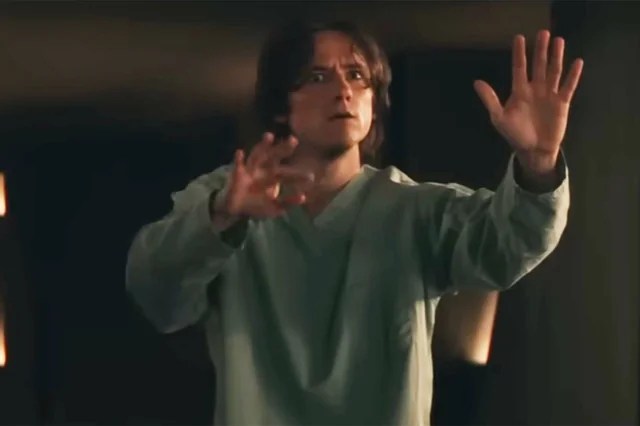
With all of this in mind, I thoroughly enjoyed the movie “Thunderbolts*” recently. If you’re a Marvel purist, you may not enjoy this post. But if you’re open to it, I believe the movie illustrates beautifully some important Kingdom truths, especially as we experience them in our present cultural deficits.

  1. Emotional Health is real, and a real need even (and especially) for Christians. In her role as a pastor, my wife is leading a group through the book “Emotionally Healthy Spirituality“. It has been a blessing to share the journey with her and others. Toward the beginning, Yelena shares advice with Bob to “stuff it down deep” to his question of what to do with the “emptiness”. An emotionally healthy person can be aware and respond authentically with self-regulation even to unpleasant emotions. Pretending everything is fine and peace exists, when there are real challenges or biological alerts that something is not okay, denies a major part of who God has created us to be. As we see toward the end of the movie, this creates a “shadow self” which is not our real and authentic self. We become focused more on controlling and manipulating both ourself and others without recognizing the humanity of anyone. In fact, (as illustrated poignantly in the “Dark Sentry” moments) we “dehumanize” others, displacing their authentic self, consuming them for our purposes in ways that leave them as isolated as we were feeling in the first place. As we do this, the darkness we thought we had “dealt with” grows – no longer within us, but demanding space out in the reality we exist in. Such a dehumanizing darkness continues to cause isolation, both within us from our true selves, but also between us and others (especially the most “otherly” of others), and between us and God.
  2. Our Goals are Dis-ordered. We see a collection of “dis-ordered” goals, in Ox Corp’s attempt to create the most powerful “super-soldier”, called “The Sentry”. He would be male, obviously, and have no weaknesses or limitations. So many of these same goals can be found woven through our society, especially as seen in our pursuit and use of technological advances. Andy Crouch does a great job highlighting these pursuits in what he calls “the Magic”. The goal is to maximize productivity (profit/power/etc.) with minimal effort, and disregarding the human/environmental costs. We want to be as close to being “a god” as possible. We want to know everything, transcend every limit, and make anything we need or want accessible instantly (instant gratification). We want to be omnidesirable (I made up this word, but we want to be in a perpetual state of “camera ready” without vulnerable flaws or imperfections.), omniscient (have access to all knowledge in our pockets), and omnipresent (having internet capabilities connecting the globe wirelessly). We want to defend our ability to have and be these things so strongly, anyone who seems to stand in our way is no longer a person but an object – an obstacle to be removed in our pursuits. Jonathan Haidt has a bestselling book about how this cycle of anxious pursuit is unsustainable and dis-integrating. At several points in the movie, we hear a voice of reason questioning these goals being pursued without regard for the persons involved. Mel, who is Valentina’s assistant tries to point out the risks involved in offering limitless expectations to someone who is emotionally wounded, or at best very undeveloped. By offering all these divine-like promises of our culture to every child as young as they’re able to hold a screen/device – perhaps we’re doing the exact same thing?
  3. Healing comes in authentic relationship/community. Many books and podcasts are finally announcing what the research has been long showing us – to quote John Donne, “No man is an island.” I’ve loved the research being done by leaders like Dr. Curt Thompson, and the writing of Dr. Jim Wilder in areas of interpersonal neurobiology. There is so much healing available to us when we purposefully pursue vulnerability in committed community with a small group of others. We’ve “discovered” what God revealed in scripture long ago – we are made in the image of a Triune God who literally IS relationship (and invites us to exist within that relationship), revealed in Jesus Christ. We cannot exist in healthy or redemptive ways in our isolation, or in the false versions of community most of us settle for provided by social media. “Media” means “in the middle”, and so we’re reminded that a “mediated presence” through technology is not an embodied presence. It can be a helpful tool at times, but should never be seen as anything more than a supplement or liminal space to actual in-person relationships wherever possible. When God wanted to invite us back into restored relationship with Him, He was not content to send a message to us, or even appear in the clouds. He came in the flesh, walked among us, and invites us to “become His body” by the power of the Holy Spirit still today. This is what every local church seeks to be, as our specific/temporal expression of the Church across all time and space. This is our hopeful and redemptive path of response to all the “darkness/isolation” caused by turning away from God in the first place (see Genesis 3).

Just as Yelena was encouraged, we are those who “shine the light” in response to darkness (John 1:5). We do not attempt to do this on our own, but together with others. We live in this direction humbly, confessing our faults to each other, and being loved/restored each time – as we grow in the direction of more readily being those with strong attachments to our God who is Love. This will take grace, in every direction. This will take practicing forgiveness and reconciliation as an act of tangible love, even and especially where it doesn’t make sense according to the world. When this happens invitationally, even those who thought they were completely lost to darkness already can be integrated into the healing community sourced in the Holy Spirit sent by Jesus Christ. Not only integrated, but becoming part of His living and ongoing invitation to all others to come and be soaked in the healing realities of Father, Spirit, and Son. That sure sounds like a great commission…(pun intended).

Posted in Different Scriptures, Different Thoughts

effective (mens/womens) ministry

“Revival will not come through your children’s ministry….Revival will not come through your women’s ministry….Revival will come when we turn the hearts of men back to God.” (source purposefully not mentioned)

These were from the final moments of a recent message I listened to. Maybe you agree and are passionate about these words. Maybe you hear the imbalance in them, as I did. I was given this message by a dear friend, who was excited to share. I listened because I trust his heart. In the first few moments of the message, and several points throughout, I wanted to turn it off. Complaints about the “feminization of the church”. Complaints about poetic songs about “Drowning in an ocean of His Love”. Complaints about flowers and fonts/colors that are too soft and effeminate, accusing these things as the reason men are no longer drawn to local churches. My Bible sure seems to have some beautiful poetic images (the speaker himself even talks about us being the “poiema” of God), words about noticing the flowers, and descriptions of colors.

He then went on to make a list of 3 “Voids” that exist in men today, declaring as if prophetically that if churches addressed these specific needs for men we would see a new revival of God’s Spirit in our churches. I’m glad I kept listening to the message, because I believe he’s right. Although not in the way he might think. I hear his accusations of the ineffectiveness of silos in ministry like “Children’s” or “Women’s” (or “Youth Group” or “Young Adult” or “Singles”, et al). But I don’t believe addressing the silo of “Men’s” ministry will do anything beyond manufacturing the same sort of “boost” (even with amazing limited impacts) any of these ministries offer.

Yet there is still a powerful truth in the 3 “Void’s” he identifies. I believe these voids exist not just for men, however. I believe these are 3 powerful avenues of healing needed for all men, women, and children in our world today. The speaker was spot on when he focused on different generations connecting in deep, Jesus-honoring relationships. I believe if a church can connect younger men with older men, and younger women with older women, and nurture confessional communities where “Truth-telling”, forgiveness, and prayer are part of our DNA, the Holy work of the Spirit of God will breathe a revival deeply needed for the healing of the nations.

  1. First he mentioned an “Affirmation Void”. Specifically he talked about young men whose fathers never communicated their love for them. I don’t need to prove to you, this is not a male-centered experience of life. Plenty of young women would have loved to hear “I know and love you. I’m proud of you. I enjoy time with you.” Each generation of parenting has focused on different things. As parents, we feel the pressures of the world around us and we want to prepare our children for success. When we move away from a trusting relationship with God and our own Belovedness, our children become “products” we help create, or “proof” of why we should be valued/affirmed in a world we seek the approval of. Whether we’re strict and value their success, or we’re relaxed and value their freedoms to experiment, we can focus so intently on resourcing what they’re becoming that we forget to focus on loving who they’re becoming.
    • So how do we respond? We purposefully become and nurture spaces/times where affirmation is practiced, strengthened, and experienced (Ephesians 4:29), especially across generations. We help all our generations become aware of their feelings, in order to examine our emotional responses. As I become more “attached” to the Love of God both directly, and indirectly through others, I have more freedom to love my children for who they are – separate from any of my identity coming from theirs. We foster moments where connections are happening between generations – inspiring older generations to continue dreaming and younger generations to have visions for who they can become. (Acts 2:17)
  2. Second he mentioned a “Community Void”. He talked about men feeling alone, like no one else knows them, or know one else experiences life like they do. It probably isn’t surprising to anyone to hear, with so much being said about our current “lonliness epidemic”, that there’s only a 1% difference between the experienced lonliness of men and women (Even with women being perceived as having the ability to share more deeply about their emotions.). Our world is just not conducive to building and sustaining intimate committed friendships across time. My wife is ridiculously gifted at this, and I’m so thankful for the ways she has set an example for me, and continues to invite me to consider my own friendships. Our world offers unlimited shallow connectivity with just enough dopamine and cycles of activity to make us feel like we’re generating authentic community. One of the lies of our world is that intimacy can only come through sexual relationships, which has become the source of so much disintegration in those seeking intimacy. But connection, even sexual, is not relationship – we know this by now, when we’re willing to be a Truth-telling community. We have huge amounts of activities (even as churches) that do not deepen our experiences of knowing, being known, loving and being loved. The speaker pointed at all the young men addicted to pornography and video games as proof. I believe him, but I don’t believe young women are doing any better just because they turn to different false sources of connection.
    • So how do we respond? We purposefully become and nurture places where authentic intimate relationships can happen. We talk about, and give a shared vocabulary to our need for the healing intimacy that can only be found as we’re reconciled to God in Jesus by His Holy Spirit. We offer and encourage things like “Discipleship Bands” (John Wesley called these “Band Meetings” for banded discipleship) where Truth-telling, forgiveness, and prayer together help make our Beloved-ness something tangibly experienced. We offer co-ed “Small Groups” (John Wesley called them “Class Meetings“, you might call them “Transformation Groups”.) As this kind of relational intimacy becomes part of our DNA, we will not only experience healing for ourselves, but we become a source of healing for our communities. This is a shared biological need, the need for felt connection. So we can trust that a Jesus who desires healing (the root meaning of the word “salvation”) will always join us by His Spirit when we as the Church seek to invite others to this.
  3. The Third and final “Void” he mentions (though I’m sure there could be more) is what he called the “Agency/Authority Void”. By this he means, we have so many young men who feel stuck in cycles of sin, powerless to advance in their spiritual life. I write this as a man, but I’m pretty confident the modern approaches many of us grew up with, left many of us of both genders feeling this way. Many of us were told what sin was, and to avoid it. We were given unlimited content, apologetics, and even today have access to the most inspirational presenters from across the world. The assumption was, the more correct and encouraging information we can put in our brains, the more transformation will occur. Unfortunately we can end up drowning in content, feeling no more deeply attached to the Love of God in our soul’s deepest sense of self. Both current neurological research and ancient spiritual practices proclaim we are less influenced by what we think than what/who we love.
    • So how do we respond? I believe the ways we addressed the first two “Voids” above will automatically contribute greatly to this third area. I also believe we must become places and nurture experiences of God’s perfecting Love alongside the Lordship of Jesus Christ. Our world often believes the loving approach to any particular is to reduce the expectations, boundaries, or limits. But with less integrity in our boundaries, it makes sense we would see increased dis-integration in our world. The good news of Jesus Christ is that we have received a Lord who became like us, served us to the point of it killing Him, and conquered even death itself in order to join and empower us. By His Holy Spirit, He shares that victory with us, reconciling us to relationship with God. We can deepen not just our knowledge, but our experience of that relationship in Spiritual Disciplines. From within that relationship in Jesus’ name, we share His authority over all the forces of darkness we do not understand. We are set free not only from impact of others’ sin, or the guilt of our own sin, but also freed from the power of continued cycles of sin. John Wesley called this “Entire Sanctification”, which the speaker also alluded to in his message. I believe if our local churches become communities who preach/live this message not as a judgmental indictment, but as a loving confession and invitation toward healing – we will humbly invite a revival the Holy Spirit has already begun and desires to accomplish in our midst.

May it continue to happen in my heart. May it happen through our Churches, and for the sake of our neighbors. May His Kingdom come, on earth as it is in heaven. Amen.

Posted in Different Scriptures

eyes opened to holiness

In Acts 26:18, Paul is telling his story of meeting the resurrected Jesus on the road to persecute Christians in Damascus. Jesus tells him from now on, all are sanctified (made holy/set apart) by faith in Jesus. Not by our behavior, although putting our faith in Jesus necessarily involves our behavior. Just like putting our faith in a chair takes shape as we lower ourselves to rest fully on the foundation a chair’s seat can provide. If I told you I had faith in a particular chair, but you never saw me sit in it – you may begin to wonder if what I was saying was true. In the same way, we are not made holy by our performance, or by a list of what we do or don’t do. But our faith becomes reality as we live out the Lordship of Jesus and His Ways over and above what we might desire or what our world proclaims to be a desirable or profitable way. As we abide in Jesus, we are “sanctified”. What does that mean?

Let’s look at where else this same word is used. One of the most familiar places is in the Lord’s prayer in Matthew 6:9, as we begin “Our Father in heaven, Holy is Your name.” Holy is your reputation. God is set apart and “otherly”. God is pure. The word is also used in the Old Testament, to put limits around Mount Sinai because it’s Holy (Ex. 19:23) or to “Remember the Sabbath day and keep it Holy.” (Ex. 20:8). It’s also used in Ezekiel 37:28, as God speaks through His prophet to say, “Then the nations shall know that I the Lord sanctify Israel (“my people”), when my sanctuary (“dwelling place”) is among them forever.” Here we see why so many Jews might be upset with Paul to the point of wanting him silenced.

Paul declares that He has been obedient to the vision ever since. Not just a vision, but a “heavenly vision”. This is not something he dreamed on his own, or something he decided, but the words of Jesus directly, who spoke in Hebrew and is Lord. He declared those same words in Damascus, and then throughout Jerusalem, and Judea, and out into the Gentile world. Remember the words of Jesus Luke gave us at the beginning of Acts 1:8? “But you will receive power when the Holy Spirit has come upon you, and you will be my witnesses in Jerusalem, in all Judea and Samaria, and to the ends of the earth.”

Paul went out with this message from Jesus into the Gentile world, sharing the gospel – the “good news” that ALL could now repent, all could now turn from darkness to light, be brought into the authority of God, receive forgiveness from their sins, and be made Holy by faith in Jesus.

He not only encouraged them to repent intellectually, acknowledging the truth internally. He encouraged them to live in ways that were consistent with repentance. If we come to Jesus and claim all the freedoms and power in His name, but then live according to the same ways and patterns and oppressive forces that bound us previously – this is not a life that has turned fully toward the authority and presence of Jesus by His Spirit here and now.

But, Paul says, it was this bold message among the gentiles that caused the Jews to seize him and try to kill him. God has protected him up until this point, so that he can share his testimony with all who would listen in those moments – both those with lots of power, and even those who had no power. There were probably servants, and maybe even other prisoners in the room waiting for their chance to defend themselves. This “good news” was meant to be heard, and was powerfully available as the Truth for everyone – no matter who they were.

He highlights the impact of his message one more time – the reason he is being accused, is the same reason he defends himself. This is not something outside of Judaism, or a new faith he’s inventing. This was spoken of by the prophets and Moses long ago. The Messiah, Christ, must suffer, and being the first to rise from the dead, he would proclaim light both to our people and to the gentiles. This section of Acts 26 continues to speak of moving from darkness to light.

In the resurrection of Jesus, the light of New Creation shines on both Jews and Gentiles. As Peter declared in Acts 15:9, “in cleansing their (the Gentiles) hearts by faith he has made no distinction between them and us.”

Paul has been saying, the same holiness – the same “set apart”-ness that was only reserved for the Jewish people previously, was now branching out to graft in any gentile who came to God by faith in Jesus. In fact, he was saying, with Jesus being the fulfillment of the Law – this was the only way the Jewish people now came to God – through Jesus. Jesus said to Thomas, “I am the way and the truth and the life. No one comes to the Father except through me.” (John 14:6)

It was only through Jesus that anyone would now join the promise God made to Abraham long ago. We find the words in Genesis 12:2-3. Even today, they’re often read as if they apply only to the Jewish people, or to a modern nation state of Israel. But Paul declares that it’s only through Jesus that both Jews and Gentiles join the promise found in these words:

“I will make of you a great (people),and I will bless you and make your (reputation) great, so that you will be a blessing. I will bless those who bless you, and the one who (speaks against) you I will curse, and in you all the families of the earth shall be blessed.” (Genesis 12:2-3) To believe the resurrected Jesus is the fulfillment of ancient Judaism for God’s Kingdom launching out into all humanity and creation is not a rejection of Jewish faith, but the beautiful way God always intended His story to redemptively grow, from His people Israel out into a renewed humanity.

We don’t see Paul telling those who listen “You will be cursed if you speak against me!” The word “curse” today has a very particular connotation. But this is the same word used in Genesis 3:17, “cursed is the ground because of you”. Adam didn’t pronounce a curse on the ground, but because he no longer lived in perfect relationship with God anymore, the natural order of creation had been damaged, broken, in need of repair/healing. The ground could even still be fruitful, but it would be incredibly difficult work, God tells them.

The promise from Genesis 12:2-3 doesn’t become something for Paul, or the Jewish people, or we as Christians today to use against our enemies – “You’ll be cursed if you speak against us (or “God’s people”)!” But when someone purposefully denies or turns away from the healing presence of Jesus, denies relationship with God and His body (the Church), they will continue living wounded, wounding, and in need of repair/healing. Our triumph over evil in Christ moves us with the compassion of Jesus toward those still living in the curse of bondage.

Such grace was scandalous to Jews who held tightly to their identity as “God’s chosen”, their control over the law and faith. But such grace enabled Paul to see, and offer sight to the blind. Will we live and walk in the light as those whose eyes are opened by Jesus? This is how we testify our faith in the reality of our resurrected Jesus.