Posted in Different Moments, Different Scriptures

taking a walk…

Last week I was able to spend a good portion of a work day in quiet prayer and contemplation. I spoke with God, and He shared from His heart for me. It was a refreshing time in His creation, and my thoughts were slowed/simplified in His presence.
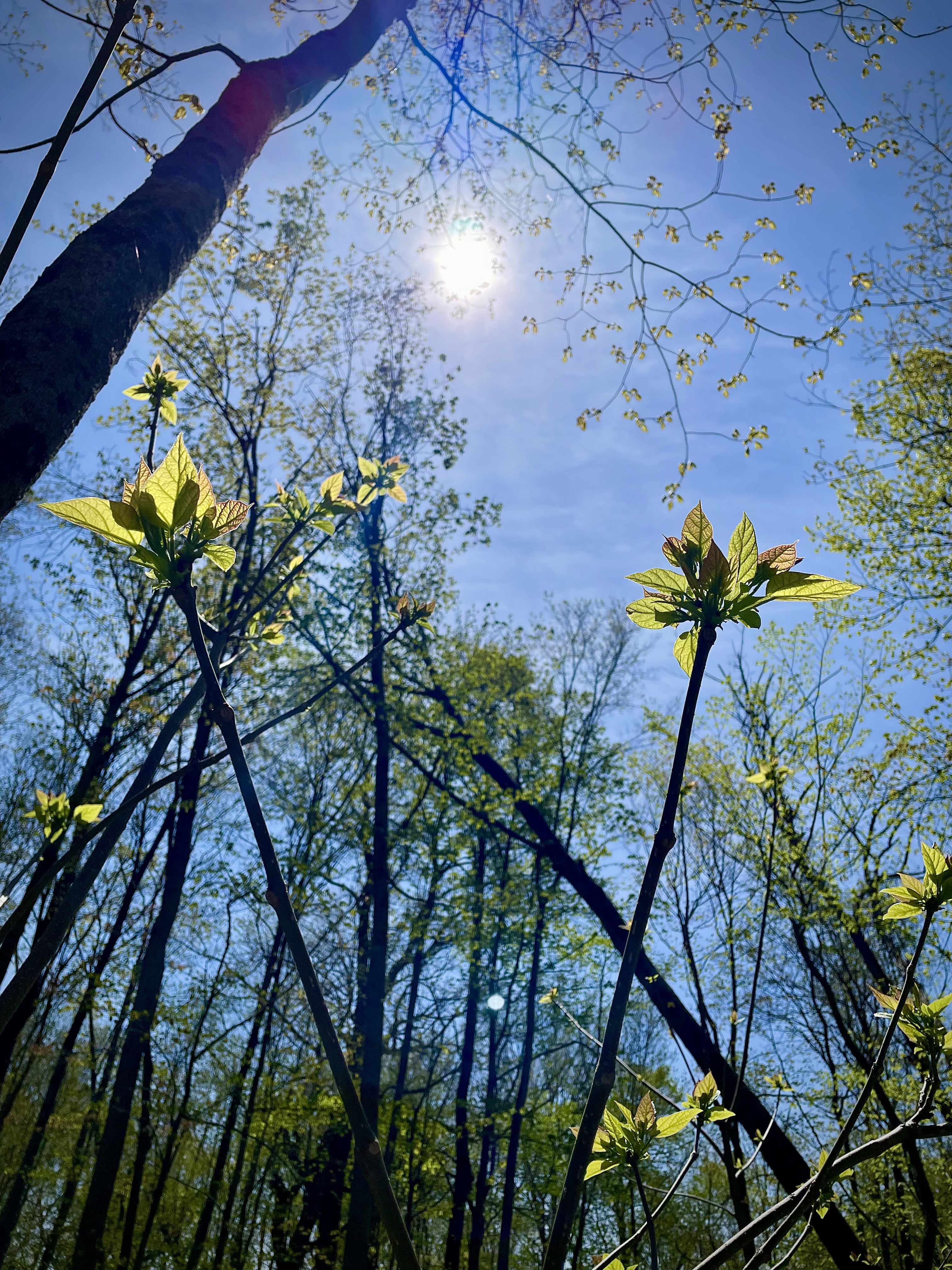
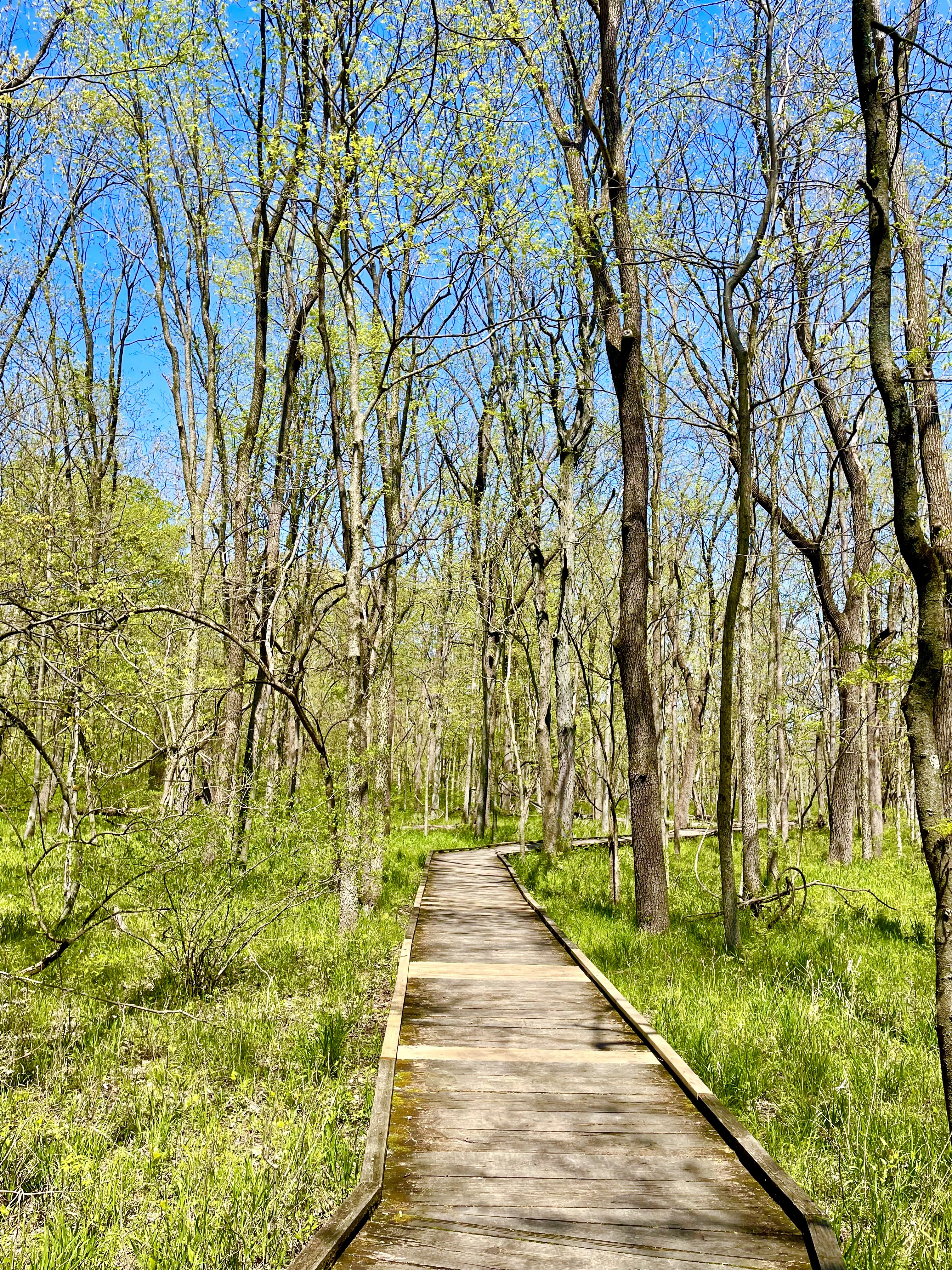
I remember learning about the “sacred pathways” highlighted by Gary Thomas many years ago. (Pause to take the survey now if you’ve never done so – it’s worth it!) It was a freeing experience to recognize that not every person or even season of an individuals’ life invites them to connect with God in the exact same way. It’s true that “Prayer” is something that should be continually present in everyone’s life, but prayer itself may look completely different depending on the family, cultural elements, and personal abilities/interests of an individual. I’ve worked with pastors who could enter a small office for a time of prayer, and emerge 5 hours later feeling refreshed. While I might be able to stretch myself in that direction, I’m much more naturally inclined to spend that time slowly walking with God on a quiet wooded path, offering those hours to both speaking and listening to His heart.

I also understand that a religion based solely on personal preferences invites us to shape God in our image, which is something we should be careful to avoid. It’s important to submit our personal preferences regularly in spiritual practices, in order to learn and grow from spiritual formation in contexts of diverse community but also in order to test and remain curious about the infinite ways God desires to meet with us in our finite experiences. I recognize among my readers, I may have those who need to hear both sides of the coin.

Take a moment to examine: Where in your past week have you experienced a spiritual practice that felt safe, but unnatural? Maybe it was more formal, where you prefer informal. Perhaps it was with others, when you might prefer solitude. In the other direction, where in the past week have you pursued a time with or responding to God that felt easily connected to your heart? Can you name at least one in both categories? Is it difficult to even recall moments you purposefully sought significant time in connection with God? Take a moment right now – allowing God to speak to your heart, and inviting you to consider how you might make a deliberate choice with your schedule or resources this next week.

In Matthew 7, Jesus shares words that have become famous, “Ask and it will be given to you; seek and you will find; knock and the door will be opened to you.” These words can often be misunderstood as asking for anything, leading us to disappointment, disillusionment, or questioning if our faith is “strong enough” if we don’t see God immediately responding. But the context of Matthew 7 is within the “Sermon on the Mount” where Jesus is describing the ways of His Kingdom which is now arriving. He had already told them to store up “treasures” in the things/ways of God, instead of treasuring things that are temporary and unsatisfying – for where our treasure is, our heart is also.

With this understanding, what are the greatest things we could ever desire/seek? Answer: The eternal things of God and His presence.

Knowing this, Jesus shares the good news: whoever asks for these things – receives them. Whoever seeks His ways, finds them. Whoever knocks on His door, wondering if He has time/love for them – discovers the door of abiding in His presence is always opened to them. We know this, but so often we fill our silent moments with noise and distraction. We fill our slow pace with hurry to accomplish what feels important.

Kinda makes you want to take a walk with God, eh? He’s ready when we are…

Posted in Different Thoughts

important Free Methodist updates…

I’d recently shared these with others, and this seems like a great place to post some updates the Free Methodist Church has made to it’s most recent “Book of Discipline“. These give us important guidance on topics of capital punishment, the criminal justice system, and creation care. A few other updates were made, but I wanted to share these three specifically. (The links for each will direct you to the full text of the resolution, giving the background/Biblical foundations for each.) I’m thankful to be part of a global movement that continues to seek a faithful response as we pursue the arrival/revealing of Jesus’ Kingdom here and now by the power of His Spirit…

“The Free Methodist Church is deeply grieved when any life is taken by murder. We believe that persons who commit these or other horrendous crimes should be justly punished by just laws. Nevertheless, we believe that all human life is sacred, created by God, and therefore we must see all human life as significant and valuable. When governments implement the death penalty (capital punishment), then the life of the convicted person is devalued and all possibility of change in that person’s life ends. In well documented studies innocent people have become condemned and executed, in which cases a sentence meant to bring justice becomes an additional and irreversible form of injustice. For these reasons, the FMC deems the death penalty as currently applied to be inconsistent with our commitments to the sanctity of life.” (Pp. 3222 D)

“A criminal justice system plays an important role in securing peace and order for a society, protecting innocent people from harm, punishing wrongdoers, and delivering some semblance of justice for victims. Such systems, however, do not always perform these tasks justly. While victims of crimes ought to receive special moral attention, victimizers should receive fair treatment, and the opportunity to repent and be rehabilitated.
Although Free Methodists submit to the justice systems of their time and place, we do not unwittingly affirm their understanding of or approach to justice. Such systems should be in a continual process of review and revision toward achieving justice that is equitable and seeks the common good. We especially lament the ways in which such systems incarcerate, target, and treat particular demographics disproportionately. Free Methodists oppose any system that demeans, abuses, depersonalizes, or enslaves human beings, treating them as less than human. We are accordingly committed to justice systems that protect and defend victims of harm without violating the dignity of those punished. God is our Redeemer. It is not the job of the state to redeem those who commit crimes, but the state’s criminal justice system must conscientiously preserve space, time, and humane conditions for the restoration of all to human community. The church, including the Free Methodist Church, plays a central role in this restorative aspect of justice through our chaplains, local church ministries, and similarly focused ministries. Remembering that all people are created in the image of God and for fellowship with God, Free Methodists will actively pursue criminal justice system reforms that recognize and protect the dignity of all persons.” (Pp. 3221 D)

“The Lord God brings salvation to earth through a series of revealed covenants, culminating in the New Covenant in the blood of Jesus Christ. The first of these covenants, God’s covenant with the earth (Gen 9), is instituted following humanity’s fall into sin and after the flood. The rainbow is the visible sign of this covenant. God thus has an everlasting covenant with the earth (Gen 9:8-17), as well as His saving covenant with people. As God’s stewards on earth, called to “cultivate and care for it” (Gen. 2:15, NABRE), we affirm that God’s covenant with the earth constitutes our stewardship commission.
Therefore:
A. We affirm the goodness of God’s creation, the value—physical, emotional, social, and spiritual—of engagement with it, and our responsibility to care for it as an integral part of our Christian discipleship and God’s Creation mandate (Gen 2:15).
B. We lament the ways in which humanity has failed to fulfill these responsibilities, polluting our environment, damaging ecosystems, and harming other species. The consequences of such failures are borne the most by the poor and marginalized.
C. We affirm and seek to support effective ministries of creation care such as reducing our consumption, tree-planting and reforestation, sustainable agriculture and energy production, drought prevention and relief, environmentally sustainable transportation, appropriate recycling, and the minimization of waste.
D. We commit ourselves to be faithful stewards of God’s creation, engaging in practices that reflect God’s covenant with the earth and our commission to care for it, especially in our preaching, teaching, and spiritual practices; the sustainable stewardship of our church buildings and properties; global and local missions work and ministry; and civic efforts to care for our environment.
E. We, along with the whole of Creation, groan in anticipation of the time when “the creation itself will be liberated from its bondage to decay and brought into the freedom and glory of the children of God” (Rom 8:21). We eagerly look forward to the renewal of the whole of creation when God through the work of Jesus Christ finally “reconcile[s] to Himself all things, whether things on earth or things in heaven, by
making peace through His blood, shed on the cross” (Col 1:20).” (Pp. 3232)

Amen. 🙂