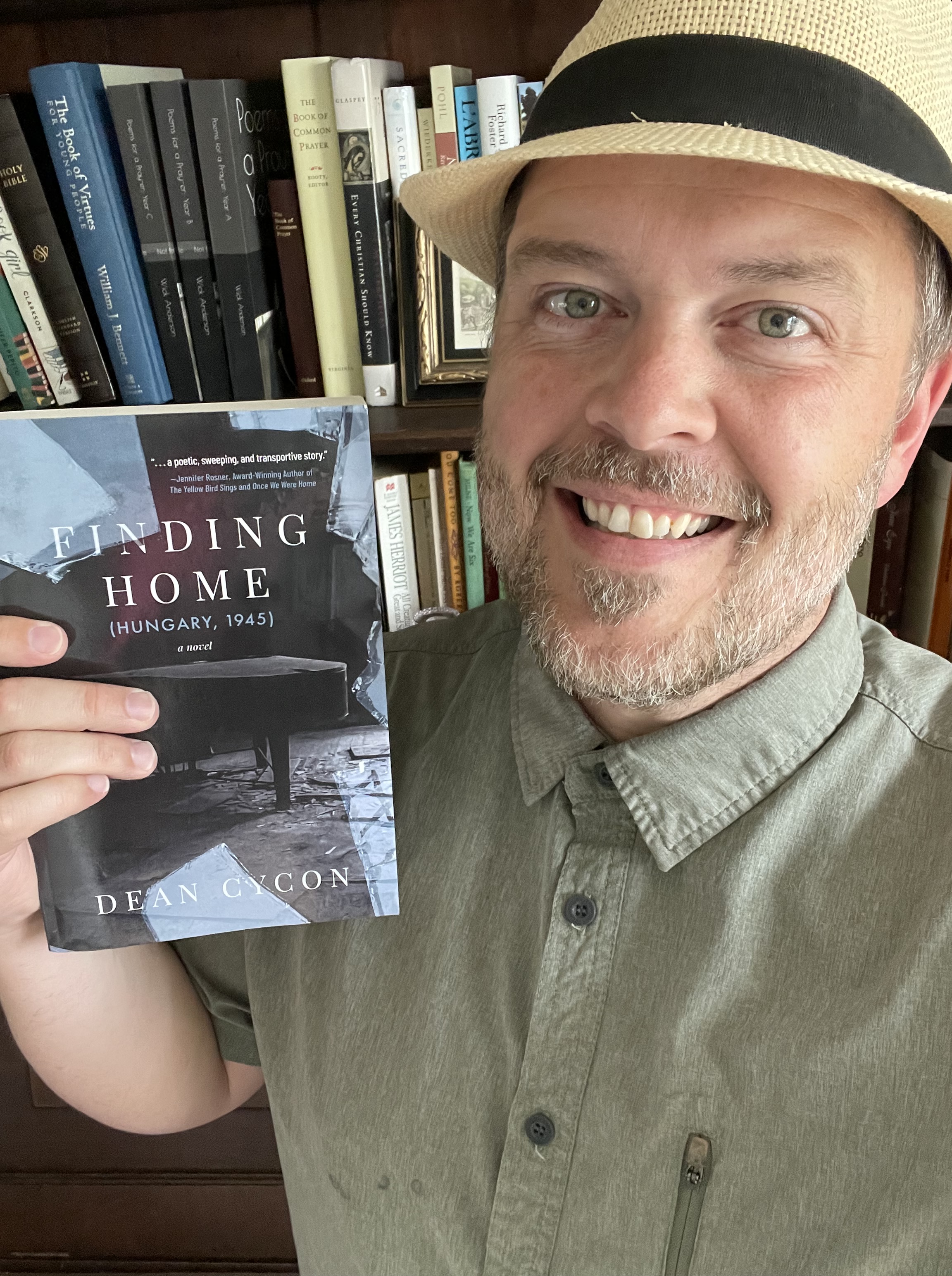
From the book cover: “For nine months in Auschwitz, eighteen-year-old Eva Fleiss clung to sanity by playing piano on imaginary keyboards. After liberation, Eva and the five remaining Jews of Laszlo, Hungary, journey home, seeking to restart their lives. Yet the town that deported them is not ready to embrace their return. Their former neighbors and friends resist relinquishing their newfound status and property, and they struggle with their roles as perpetrators, enablers, and bystanders during the Holocaust.
Longing for connection to her old life, Eva agrees to clean her former home, now the mayor’s home, in return for practice time on her piano. As her profound experiences allow her to access music at a depth she didn’t know existed, Eva’s performances begin to affect those around her-with unexpected consequences.”
Quote from the book: “The women in the camp said Jews mitigate the distress of loneliness through communal compassion, but except for the baker Eva didn’t know any of these men. What did she represent to them? A lost daughter or sister? A community that no longer existed? She didn’t want to be their Jewish hope for the future, she didn’t want to be anybody’s anything. Maybe she was being selfish, but the weight of her own grief was hard enough to bear without being responsible for anyone else’s happiness.”
Here we have just one example of the beauty within “Finding Home”, a historical fiction recently released, written by champion of great coffee, Dean Cycon. Even with so many books written that involve this tragedy of human history, this book stands out as a unique invitation to know the hearts of a particular experience. His research and his own heart shine through over and over again throughout the book, as he captures and shares well what it may be like from the perspective of each character. I hesitate to write too much, because I really don’t want to spoil anything. Having lived in Hungary, and having grandparents who fled Jewish persecution years before The Holocaust, the book hit home several times. You are invited to wrestle with God in a faith that becomes more than words. You can imagine strolling the streets of a post-WWII Hungarian village. You are introduced to cultures and worlds you knew existed, but always from a distance. You can imagine the difficult relationships a young woman would need to navigate as she returns, infinitely wounded, to a place where wounds have become the way of life.
Thankfully, you can also hear whispers of hope and healing throughout. Even in the darkest of nights, a small light shines and can make all the difference. The power of music to transcend our woundedness, even as it gives voice to a healing lament, is a moving part of this story – and our world still today. Cycon also does an amazing job of “explaining” elements of both Jewish faith and classical musicianship in ways that help you feel invited – even if you’re an “outsider” in these areas usually.
As with any book involving the immense suffering and injustice of The Holocaust, I would use discretion in recommending to younger readers. Most everything about this topic should offend us. Parents – read it first, and decide for yourself. But there is nothing offensive included gratuitously.
I highly recommend reading this book, especially while sipping a cup or 10 of great coffee, and enjoying a Kakaós Csiga as well. Caution: Seriously, you will end up wanting to visit Budapest after reading this book. If that happens, let me know – I’ve got some great friends in Hungary who would love to help you plan your stay. Until then, “Olvassa el ezt a könyvet, és Isten áldja meg.”


 words from wick