

Posted in Different Scriptures

are we willing to be unnamed?

In one of this weeks’ lectionary passages, we find the story of the prophet Elisha being used by God to anoint Jehu the next King over Israel (2 Kings 9). But he doesn’t go anoint Jehu himself. He calls one of the prophets who serve with him, and sends him to do it. He tells him to hurry, and communicates the urgency of the situation. Once Jehu has been anointed, he tells the prophet, he must run away quickly as well. Which makes sense – if you’re anointing a new king while another king still seems to be on the throne – you should get a safe distance away, quickly.

This is an important moment in the history of God’s people, as He begins to bring judgment on them for straying so far. There are difficult moments of restoration ahead. But here in these passages, we hear the foreshadowing of Jesus being welcomed as the new king in Jerusalem, even while other powers still seem to reign (Matthew 21:8). 2 Kings 9:13 pictures Jehu’s fellow officers throwing their cloaks under his feet as he walked, proclaiming & welcoming him as the new king.

It was such an important moment. It was included in the stories we have, that were passed down for generations. We tell the story of the prophet still today, as he obeyed Elisha for what he had been called to do. No big fuss was apparently made, even though this would have been a dangerous mission. If caught, he would likely face accusations of treason, if he survived long enough to do so. Perhaps that’s one of the reasons the name of the prophet wasn’t passed on in the story.

Today, God continues to invite us to speak and live according to the Lordship of Jesus Christ. We are empowered by His Holy Spirit in ways that bear fruit (Galatians 5) that is useful for doing so. This is not as we strive to “discover what is already within us”, as popular as that may sound today. This happens as we abide in Jesus, who is the vine from which the fruit of the Spirit arrives (John 15:5). We may be the branches who bear fruit – but the life of that fruit did not, and could never originate within us. Bearing such fruit is often subversive, as the ways of the Jesus’ Lordship are so often at odds with the ways of this world. Sometimes that means we should do our part, and get out of the way quickly as God continues His work.

There are times God calls individuals to be named in ways that reveal His glory within their particular story. When Jesus healed the man who’d been possessed by demons in Mark 5, he told him to go and share his story. Because of their relationships and knowledge of the man – “everyone marveled” at what Jesus had done.

But sometimes, as in today’s passage, we only know what is necessary. Someone was obedient. Someone responded to what they were called to do and because of it, the purposes of God were advanced in important ways.

Are we willing to be that “someone” today, who lives in response to the Love and Lordship of Jesus, even if they don’t get credit? Will we bear fruit for the kingdom, offering what grows – even if those who consume will only offer credit to the vine – not the branch?

May we live today in ways that proclaim the name of the King, no matter what that means for our own name…
Posted in Spoken Word

Revelation 3:1-6

To the messenger in Sardis
From Jesus, Lord of all
He who holds all in His hands
And lifts us when we fall

Lord, You know what we have done
Yet doing is not living
Your words examine our remains
For anything You’re giving

You call us out from sleeping clothes
Awaken from our slumbers
Come and strengthen what remains
Free from what encumbers

Our works are fully incomplete
Offered in our own strength
We know the depth, Lord, of Your grace
Show us now the length

May we be called “Alive” by You
Not only by consumers
May Your Kingdom come today
Not only songs and rumors

We hear your Word, attentive ears
Humbled to confession
We will conquer, not by works
But by Your intercession

Posted in Different Learning, Different Thoughts

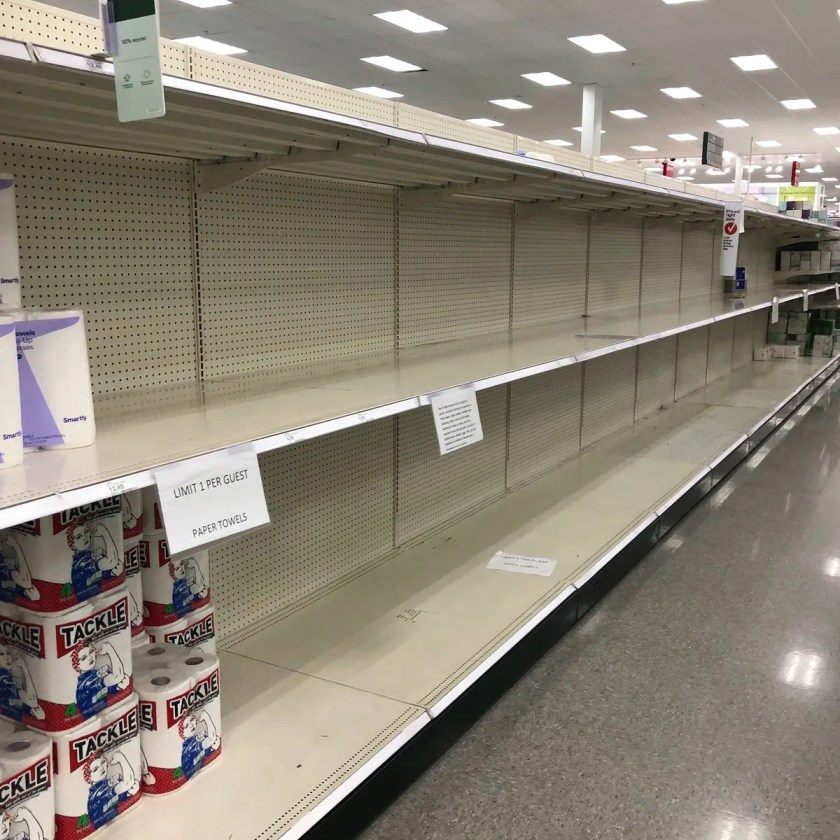
shortages

As we were living in Hungary, one thing we could not miss when watching international news coverage, was the fascination and humor most of the world watched with as the United States somehow panicked for the last remaining rolls of toilet paper. It was mind-boggling to us, as we’d never seen such a scramble for the white rolls of bathroom tissue. Surely it was just being over-dramatized, we thought. Perhaps this is just happening in the large cities. But as we talked with friends, and checked online, we saw that the strange phenomenon was happening widespread, even as most people confessed to being mystified by it themselves. Even as it was happening, memes popped up and late night talk show hosts made fun of…well….Americans who seemed to find comfort when facing the unknows of a pandemic with the dependable reality of knowing we could at least “take care of business” through it all.

Since returning to the US, it does seem like “Shortages” continue to pop up in the news. It doesn’t even take someone with a conspiratorial eye, to begin to wonder if many of these are simply well-placed advertising campaign strategies. But some legitimate shortages (most recently, Maple Syrup in Canada or Cream Cheese in the US) are still causing people and companies to think strategically, or to alter plans for consumption altogether.

Some might say that the reason Western Culture seems to notice “shortages” in ways that seem newsworthy, is that many of us have grown up or become accustomed to knowing that pretty much every “commonly-used” product we could imagine was readily available somewhere within a drive or an online order. It hasn’t taken long for this to impact our kids as they grow – with Christmas lists that often show no known limitations or boundaries. There are aspects of this we can be proud of – whimsical notions of “anything is possible” that we believe is healthy for our children as they grow. But it can also create a false sense of reality that most of the world still does not experience. Most places in the world continue to live with limitations, (and we do, if we’re honest enough to confess it), and that does not always mean a negative thing.

Now toilet paper is in a very unique category of “things I really hope we don’t have to learn how to do without.” But there is a sense in which limitations, and shortages, should be embraced a bit more readily as a positive path to spiritual growth as they come.

We live in a giant world with changing seasons, shifting climates, varying cultural backgrounds, many geographic features, and challenges as we tend to sowing and harvesting products in ways that justly care and provide for all of those involved. With so many variables, we should have limitations. We should have some foods that are only available in certain seasons. We should be thankful for what we can attain easily, and have a bit of wonder about what they have in other areas.

One of the beautiful aspects of Advent, is that we not only imagine what it was like to anticipate Jesus arriving for the first time, we imagine what it will be like when Jesus arrives fully. When Christ is revealed finally to be Lord over all things, and the Love of God swallows up all the cosmos, bringing together Heaven and Earth like never before – all things are made New. In those days (yet to come), there will be a growing shortage of shortages – as the full provision of God and His Good creation are revealed as enough (and also our hungers and consumption are brought into full alignment with His good and pleasurable ways).

In response to remembering this, we can celebrate in many ways. I would highlight two today:

  1. When possible, we can order/purchase something simple that doesn’t seem like it should be available to us because of season or location. Enjoy it on purpose, and share it with a friend, neighbor, co-worker, or child – imagining with them the coming age when all necessary things will be available and provided by Lord Jesus right on time.
  2. Purposefully choose to limit yourself of something. Sure, it may be at the store – but it’s not technically in season, or you’re not sure of the just working conditions/pay for those who labored. Choose something that you purposefully will “go without” this year. If it impacts the lives of others, don’t get all preachy – but if it involves kids – explain to them why you’re choosing to go without. Talk about being purposeful in our anticipation of the day when all that we need will always be provided – and not only us, but those brothers and sisters all over the globe.

No matter how we respond to Advent in particular, may we Christ-followers be leaders of the Way when it comes to responding to product shortages with peaceful confessions of our limited resources. We should not be surprised, and should be among those who generously seek community-beneficial adaptations when such shortages impact those around us.

May the peace of God who has already begun providing everything we truly need, fill and dwell in our hearts – and arrive through us as we share life together in community…both this Advent, and into the new year…

“But strive first for the kingdom of God and his righteousness, and all these things will be given to you as well.” – Matthew 6:33