
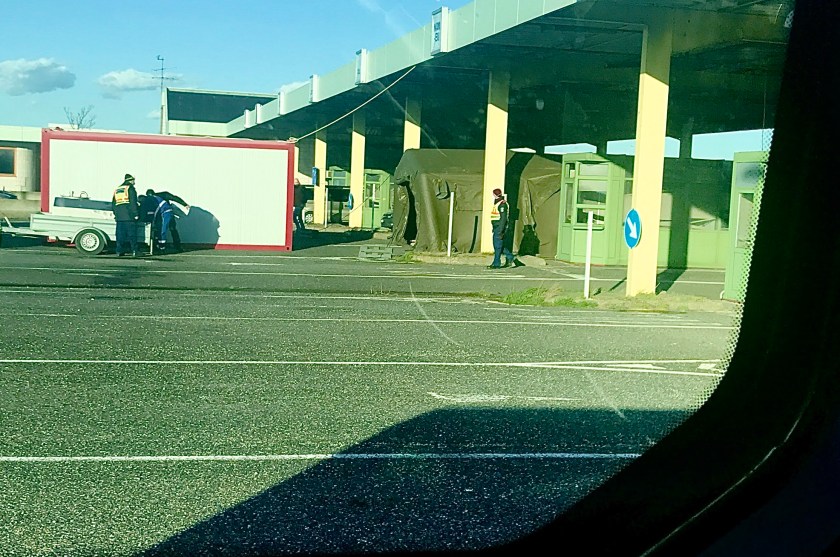
We ducked down a bit in the large passenger vehicle, trying to make it seem like it was no big deal. Our hearts were beating so fast, but we’d been told to stay quiet. Everything needed to look as normal as possible. We had no choice but to trust our driver. He had taken side roads for as long as possible, but there was no side road available near a border crossing. Before resuming the large, slow flow of single-file vehicles, he pulled over to call his wife. We had very little knowledge of the local language, but we didn’t need to understand his words to hear his concern. He was smuggling foreigners (us) across a very tightly closed border. He was telling his wife he would check back in with her after we all made it safely through the checkpoint. None of us knew what to expect.
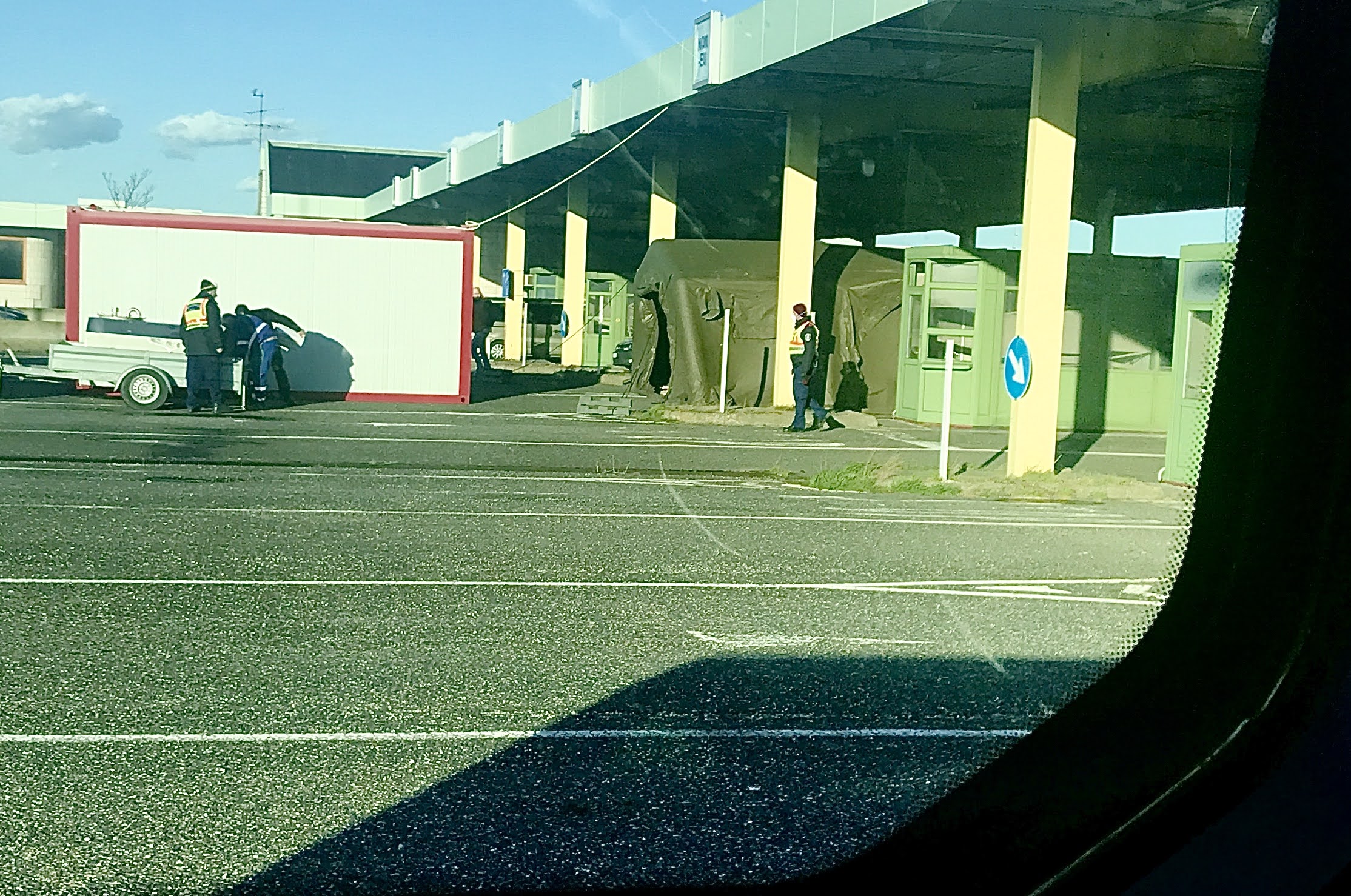
As we came closer to the border crossing, we saw the recently erected army tents. They were detaining any foreigners, even those with proper paperwork. We had heard stories of families being detained and separated into gender-specific last-minute accommodations. Countries didn’t have official responses ready for something like this. As a married father of 4 daughters, that would mean being separated from all of my family, leaving them alone in a country where none of us spoke the language, and one of us with brown skin. A country not always known for warmly welcoming immigrants. He collected our identification cards (in case they were asked for) and told us to keep quiet and to not make eye contact with anyone. “Some of you pretend to sleep.”
It was March 2020, and we were returning to our Missionary work in Hungary from what had been a short trip to celebrate my wife’s birthday in Paris (European travel is VERY cheap when you’re already in Europe!). But while we were gone, new concerns over something called the “Coronavirus” had caused panicked countries globally to close their borders over safety concerns. We were legal, temporary residents of Hungary. Most of what we owned in this world was there, in our apartment, including our family cat, Toby. But legally, at that moment, we were unwelcome foreigners. Those in the country were allowed to stay, but no one else was being admitted unless they were native-born.
We had arranged for a Hungarian man to pick us up from the airport in Vienna, Austria, and drive us the 45 minutes home to the city we were living in. It was only as we loaded our luggage into his vehicle at the airport that he realized the possible dilemma. He remembered seeing army tents being erected when he drove west into Austria, but didn’t think much of it. In that airport loading zone, looking at his American passengers, a family in need, he made a quick decision to help us. I don’t even remember his name, but even now I’m thankful, and I pray God blesses him.
I remember what was probably a 5-minute stop, feeling like hours. Soldiers approached our vehicle. I remembered our time in Congo, caring for our daughter, and eventually being able to bring her home. We’d seen soldiers before. But our daughters were fairly young and untraveled, and seeing the armed soldier after hearing our concerns talked about openly, I can only imagine how they were feeling in that moment. We prayed quietly, holding hands unseen. We looked down at the floor mostly, quietly stealing glances at the men in the front of the vehicle, talking back and forth with soldiers. We couldn’t understand their words, but he gestured back at us once or twice. It sounded like small talk, and our driver kept his cool. Finally, we were given the thumbs up, and as the vehicle ahead of us drove forward, we were allowed to follow. We entered the country, and after a few moments of tense silence, our driver celebrated aloud. He congratulated us, saying he had just officially declared we were all Hungarian citizens. We all felt even more relieved than his voice sounded as he called his wife to tell her all was well. We were on our way “home”.
“Immigration is an issue. Immigrants are people.” These words were repeated over and over when I was studying to pursue my Immigration Law Paralegal status back in 2016. As part of my “MDiv”, I’d taken a course on Multi-Cultural Ministry, and the paralegal work was offered as an additional opportunity. As a pastor, I could not represent someone in court, but I could understand the law better and help fill out the required paperwork. Life and work have taken us in new directions, and I haven’t kept up my training. But I’ll never forget the heart of Jesus I discovered volunteering with local immigration lawyers, and learning how the issues were impacting individuals and families. It’s a very broken system, in need of reform. (Example: Current processing time for a U.S. citizen to petition for their parent/child/spouse is over 60 months. 100+ months if you’re a permanent resident, but not a citizen. Can you imagine not living with your loved one that long?) People on both sides of the aisle are doing great work to ensure and promote that work continues…both for secure borders and to offer assistance to those in deep need.
All of it is a needed reminder: No one goes through these processes for fun. Especially given the climate of conversation (or lack of conversation) these days, who would want to sign up for the stigma and separation from loved ones that can come in these processes? Many do so because they are desperate for a new life, or feel forced on this path because, like us, heading back into Hungary, they feel it’s the only option, and worth the risk. The story I shared was nothing like what so many people face, risking everything for the chance, not just of a “better life”, but of a continued life in struggle, compared to a known risk of death on other paths.
Lately, it seems like those on both sides of the political extremes are launching anger at the other. Anger toward and dehumanizing those who desire safety and are working to secure borders to protect their future and their children. Others have anger toward and are dehumanizing those who desire to cross or remain within secure borders to protect their future and their children. Politicians at the top of both sides are moving pawns around, whether angry protestors or angry ICE agents, to make their points and secure future elections, without assessing the human costs involved for those suffering on the front lines.
Jeremiah 22:3 “This is what the Lord says: Do what is just and right. Rescue from the hand of the oppressor the one who has been robbed. Do no wrong or violence to the foreigner, the fatherless or the widow, and do not shed innocent blood in this place.”
I don’t have a solution. But I do agree with those calling for prayer. Calling for dialogue. Calling for greater amounts of listening. Slowing down our responses to increase safety and discernment. Calling for both sides to regard the preciousness and the humanity of those they currently see only as an obstacle to accomplishing their own goal. Lord Jesus, help us in these moments. Protect the vulnerable. Give us wisdom, and help us to move forward guided by Your Spirit, with Your Kingdom as our foundation.
 words from wick