Posted in Different Books

are you blocking experiences?

Everyone seems to be talking about this – yet I recognize some of my readers (hi mom) may not read the same sources I do. For this reason, I wanted to share something important that’s being recognized (or affirmed) in recent publications. Jonathan Haidt, who is not a believer but considers himself “religion friendly”, is a social psychologist with a lot of research to back up what he’s saying. What is his newest book confirming that most of us have already been aware of? “..the smartphone-driven “great rewiring of childhood” is causing an “epidemic of mental illness.”

It’s been on my mind a lot lately, especially as different stories have hit major news outlets. Schools in Canada are banding together for lawsuits against social media companies. What’s their accusation? “They were reckless and malicious, manipulating the brain neurochemistry of young students, getting them hooked on social media platforms, and, in doing so, causing widespread damage and disruption to the education system.

Within a week of reading that story, I also read about schools in the US increasingly looking to hire “Chaplains”, in response to the current mental health crisis. I think it’s great that schools understand learning requires a safe environment, but also a “felt” safe environment, which means helping students cope with unprecedented levels of anxiety and depression.

But with schools in Canada, and hiring chaplains in the US, and a myriad of other responses to what is happening, it seems like we’re missing a major point. I think we’re missing it on purpose usually, because it’s a lot easier than owning our role. We’re pointing fingers at others, or employing others and tasking them with bringing healing, while abdicating our role in any of this. The truth is – each of us has agency in responding to the problem. And it is a problem. Despite what those who profit from these devices and services may say in defense. I’m generally the opposite of an alarmist (ask my wife), and I’m immediately skeptical of anything someone says to try and illicit an urgent response. So I’ll wait a moment while you Google as needed to find the stats and confirm what I’m saying here. The kids are not okay.

But there is hope.

Remember what it was like growing up in a world where loving adults were placed in positions of authority and care over children?

Whether or not that was your reality, that does seem to be the intent. Whether you’re a believer who credits this within the grand design of God, or whether you’re a non-believer who credits this within the survival of the fittest – there’s a truth to it. Those who have survived longer are placed in positions of guidance and authority over those still developing a pre-frontal cortex.

Every time we’ve experienced this sort of “learning” in modern times, we’ve instituted controls to protect those who are most vulnerable because of their age. We’ve set minimum ages for drinking or smoking, because these substances are harmful and addictive. It wasn’t immediate, and there were difficult moments in instituting these controls, but they were worth the struggle. Our children, and the future generations of healthy adults who will help lead this world into a future of flourishing – are worth it.

So what are the 4 primary recommendations being given by Haidt, as one small but tangible way to make a major impact on the mental health of our youth (and subsequently help foster a tomorrow where adults are mentally/emotionally well-prepared)? Here they are:

  1. No smartphones before High School age. (Parents/guardians – we can do this!)
  2. No social media before age 16 (and hold companies accountable for this, in the same way stores are accountable for checking ID’s before sales of alcohol/tobacco).
  3. No phones in schools. (Seriously, why is this one so hard to see?)
  4. Prioritizing real-world play and independence.

If we took this list seriously, it would make a major impact immediately. If homes and places of education adopted these as norms – students wouldn’t feel the pressure to “keep up/plugged in” simply because their friends were. Sure, most youth would go through a difficult withdrawal phase. We’d have to adapt to new routines, and trust that we could all survive. Everyone reach out to your favorite helicopter parent, and give them extra affirmation – making your kids “unreachable” during the school day is actually good parenting.

One thing Haidt says over and over again, is that these devices are “Experience Blockers”. His book even includes a chapter which seems significant for a nonbeliever to include. The importance of a shared religious experience, or spiritual community that we are committed to, can make such an important impact on fostering a strength that we and our children both need. Of course it should be obvious by this point – as adults, we should be leaving our phones behind (or at least turning them off, not just silencing them) whenever we enter church on Sunday mornings (and other times of devotion/reading/prayer throughout the week).

Yes, devices offer us significant experiences as well. But this doesn’t mean they’re 100% without potential for great damage. There are plenty more links and books I could suggest, but I think the best evidence would simply be to tell you – go unplug from devices for the next 60 minutes. See how you feel afterward. Don’t we think this is needed more, across the generations?
Posted in Different Books, Uncategorized

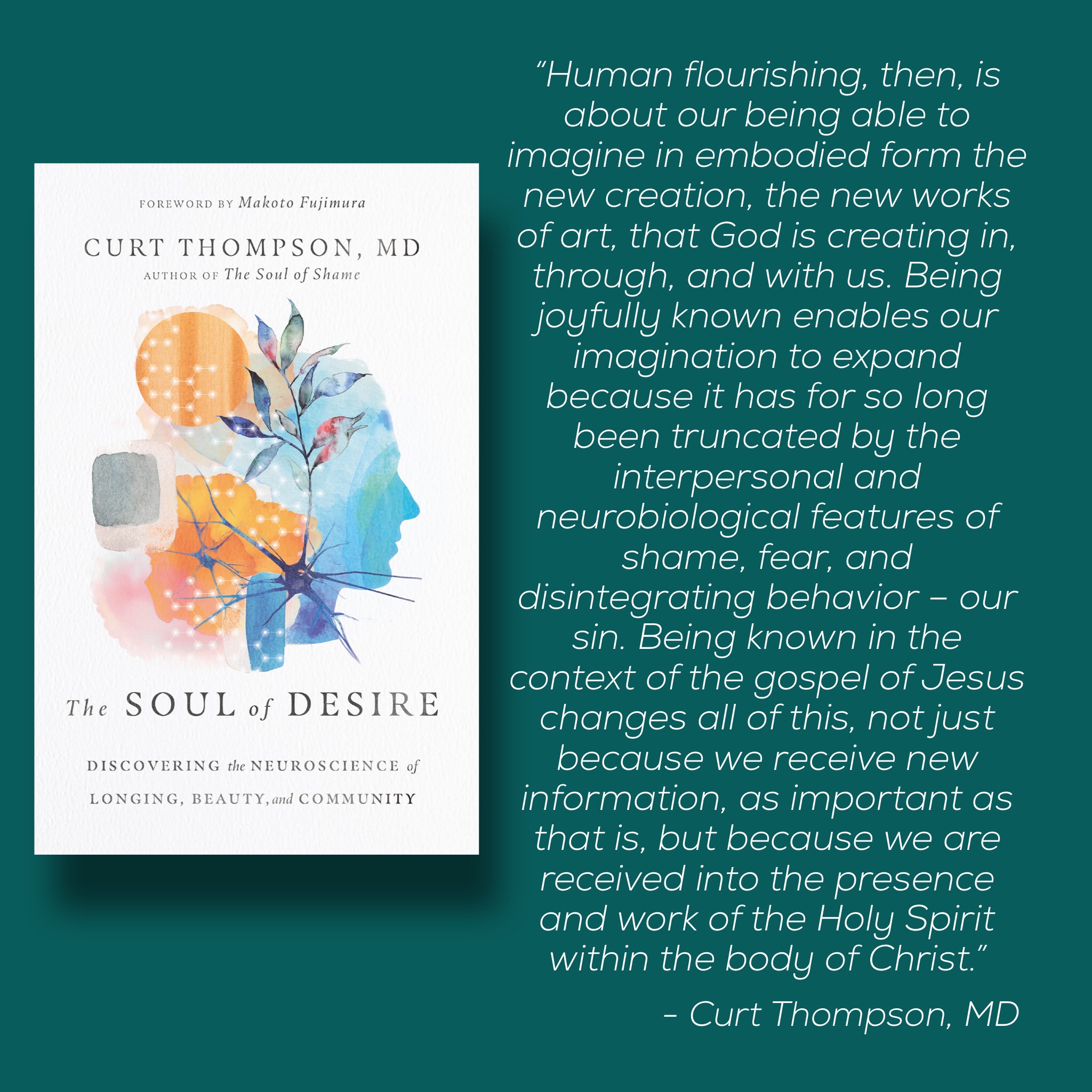
The Soul of Desire

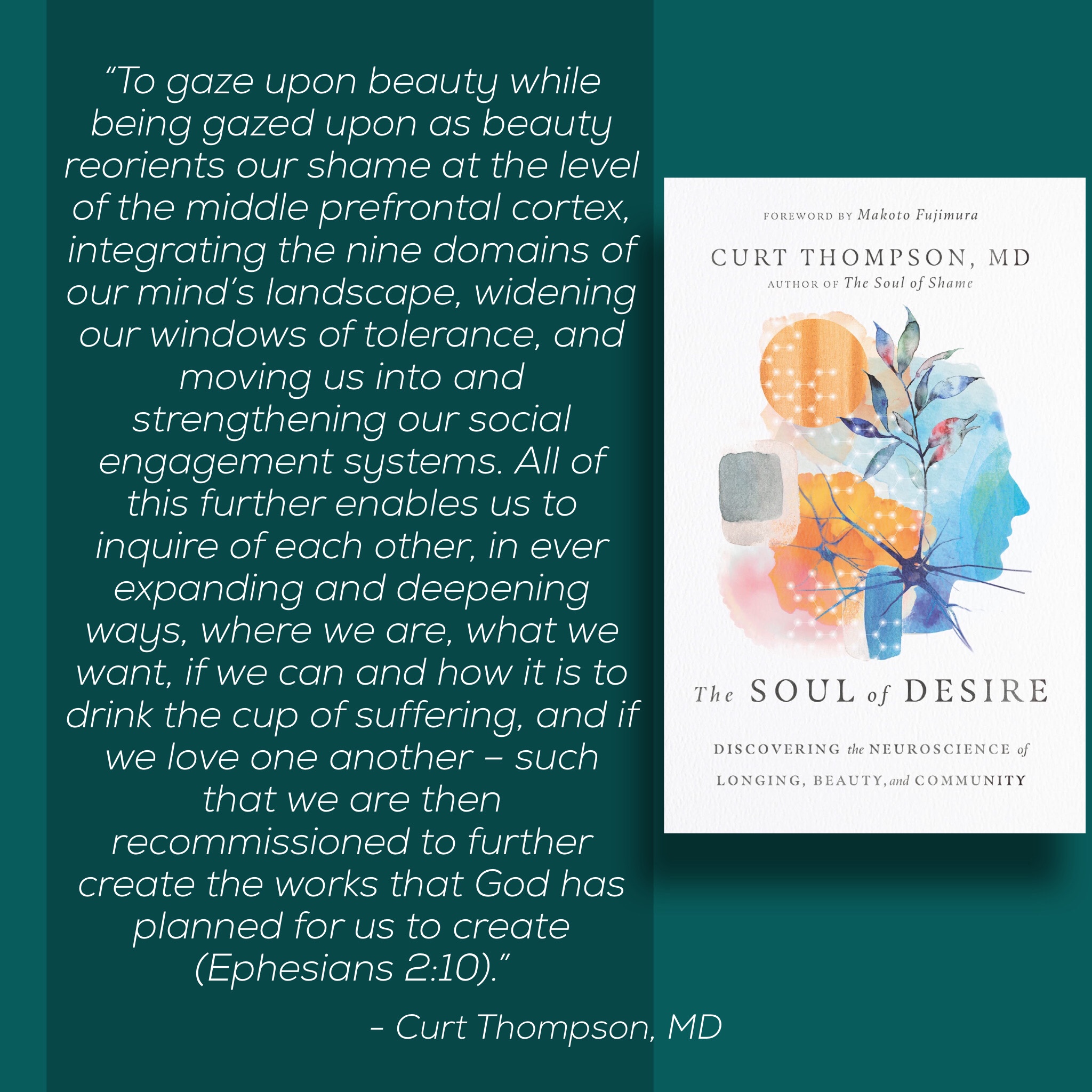
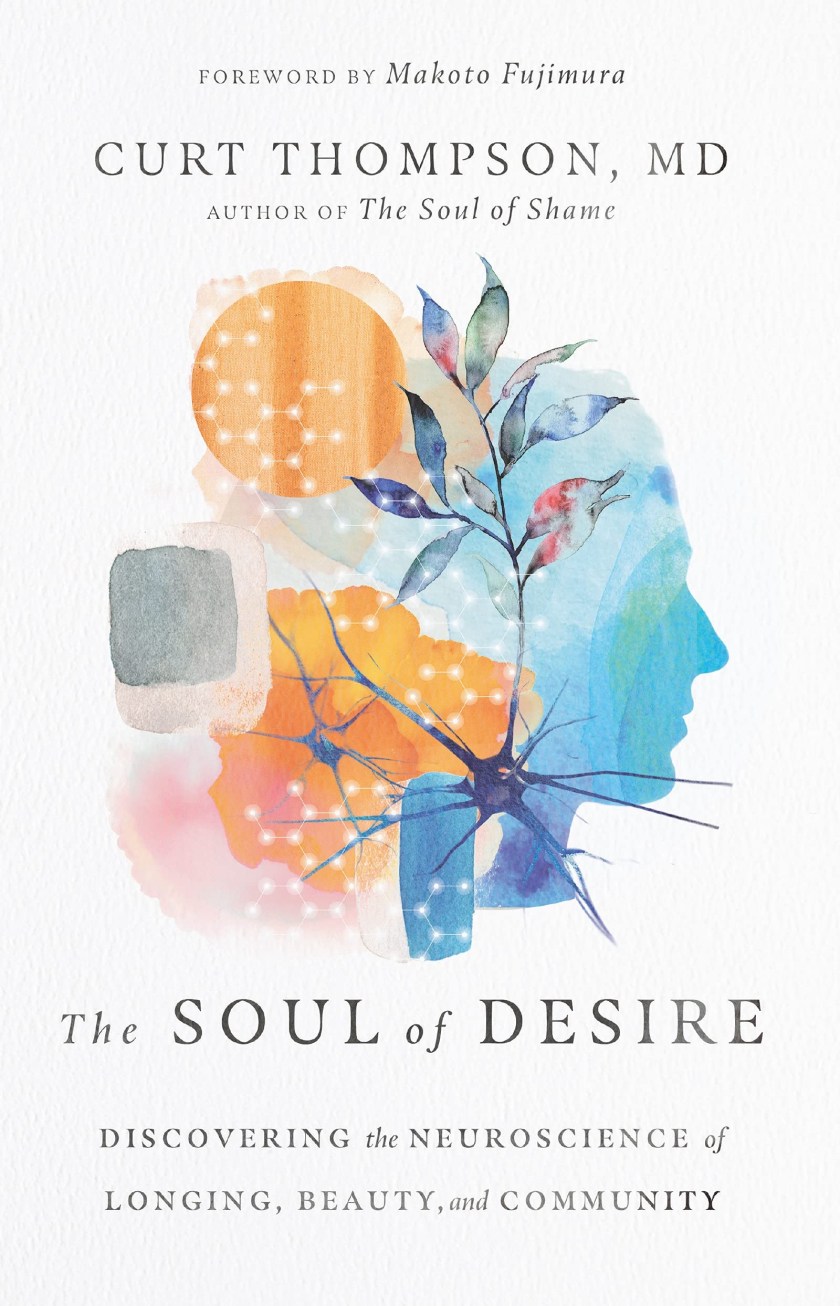
Recently I was able to read an advance copy of the new book by Curt Thompson, M.D. “The Soul of Desire: Discovering the Neuroscience of Longing, Beauty, & Community“. Having read and enjoyed Thompson’s previous books, I was excited to read his most recent contribution. As a Christian we believe there are unseen realms beyond the physical world that we are most familiar with. But we also do not seek a “spiritual realm” connection that is separate from the embodied existence we (and Jesus) share. Instead, we seek a greater understanding of how God has created us and woven our existence together as physical/spiritual beings. Because of this, we can gain much from modern studies of neuroscience as they relate to our relationships.

Thompson has already written much on the neurology of interpersonal relationships, attunement, integration, and secure attachments. In his previous books, he has explored (among other things) how telling our stories can be redemptive/healing/formative, how “being known” by each other and by God is something our souls are hungry for, and how unhealthy shame can keep us from one another and from God.

In this most recent book, he brings some of this same knowledge back in fresh ways, while also giving practical insight into how healing comes to the dis-integrated relationships and situations we often find ourselves in. Dr. Thompson does a great job of being honest about our brokenness (both as society/culture, and as individuals), and yet highlighting how God’s desire is to bring beauty and New Creation; not just after we’ve been healed, but as part of the healing and redemptive process.

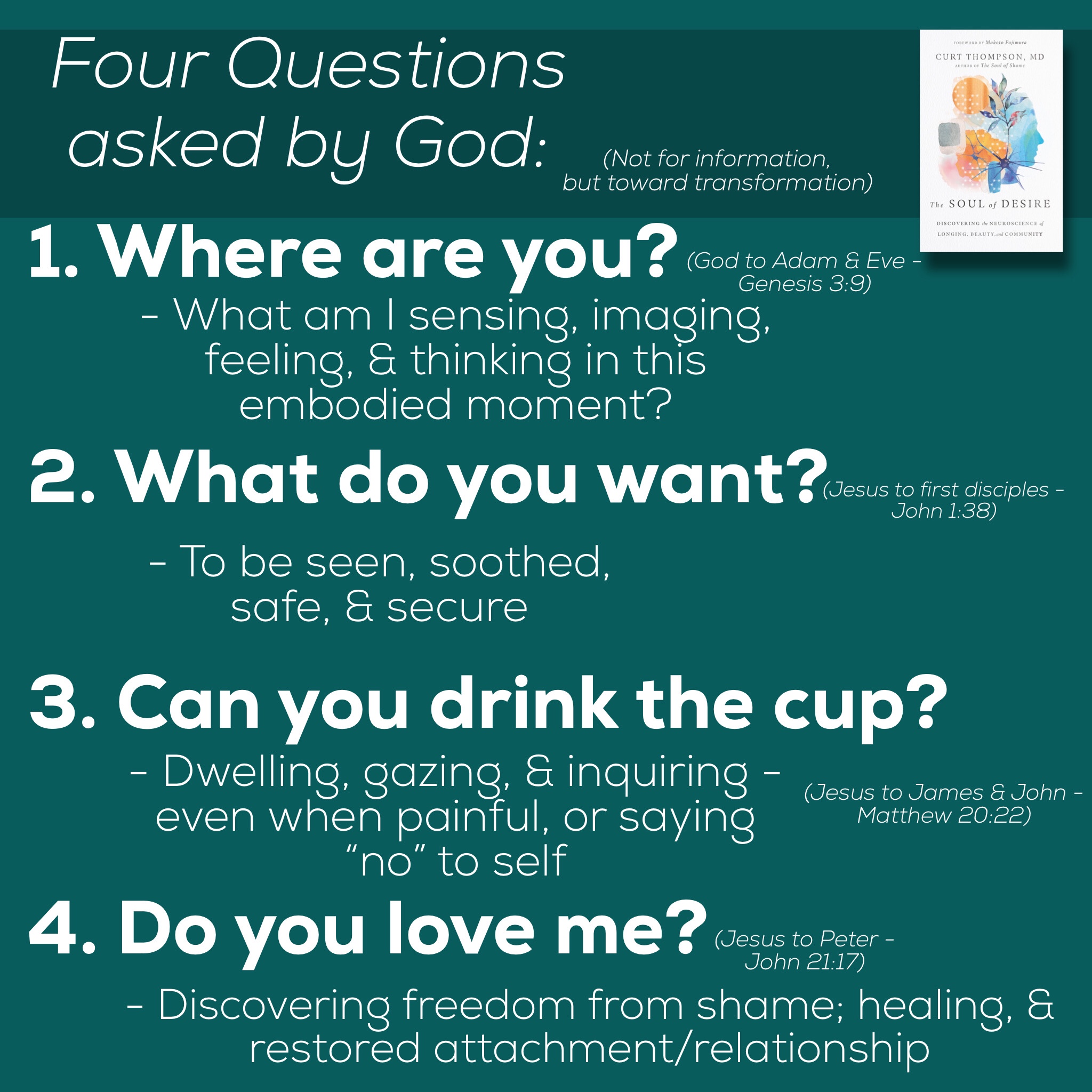
Thompson highlights how much of the relational pain/isolation we currently experience is connected to the unmet core “Desires” we see reflected in infants/children, and our common responses to those continued desires being met in unhealthy ways as we grow. I’m over-simplifying, but he emphasizes there are 4 primary desires we all have: to be seen, to be soothed, to be safe, and to be secure. He explores how the insights of IPNB (Interpersonal Neurobiology) offer us fresh understanding not only as we seek greater relational intimacy between one another, but also as we seek to draw closer to a God who invites us to know Him even as we are known and loved by Him. He returns over and over again to Psalm 27 (especially verse 4) in confessing what we’ve been created to truly seek.

Thompson spends a lot of time in this book, highlighting specific experiences of healing and redemption that have happened in the context of what he calls “Confessional Communities”. He talks also about four foundational questions we are asked by God – not for information, but toward transformation. As we read his accounts, we hear whispers similar to those of John Wesley’s heart as he developed Methods of Classes and Bands, inviting people to experience the vulnerability of confession and forgiveness in the context of secure & Divinely loving relationships. He does not offer a cookie cutter “program” in response to all of the research he presents here, but he does present inspiring truth and invites his readers to imagine (along with/in the presence of a curious God) what might happen if we pursued these things together in healthy/integrating ways.

This is not an easy book to simply say “read this with a group”. It may be best individually, or with close friend/”Band” at first. There are awkward and vulnerable moments throughout the book that may make small groups or book clubs uneasy. But I definitely recommend the book for mature/discerning audiences, and believe the truths it points toward can offer new paths for healing and wholeness in our relationships and in our communities – in ways that proclaim the gospel message our world definitely needs to see and hear.

Posted in Different Books, Different Learning

With All Your Mind…

Long ago, I discovered the spiritual connections and benefits of staying connected to neurological research.  Many of the same things have continued to provide helpful connections in personal devotionyouth ministry, and as we’ve grown in areas of parenting, and especially parenting a child who had experienced trauma before arriving in our home.   It doesn’t make us experts, and these are not magic, but they certainly help give us a better understanding as we seek to be faithful with all God has given us.

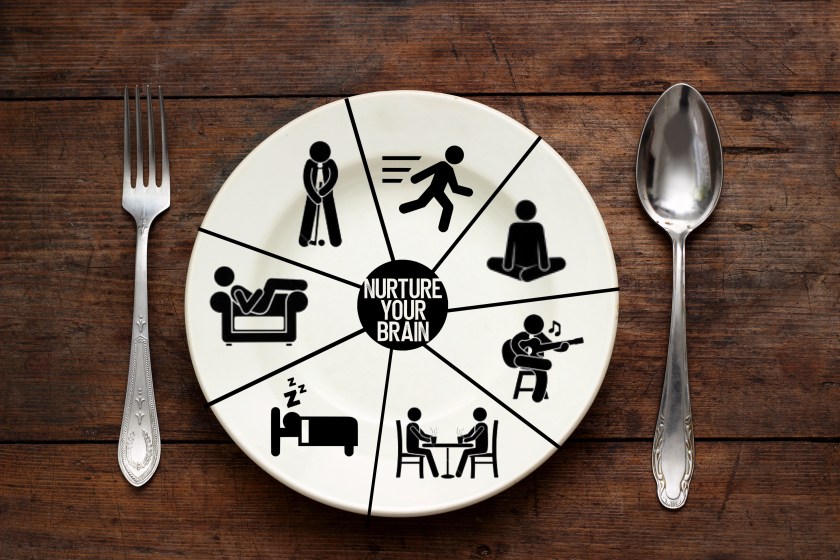
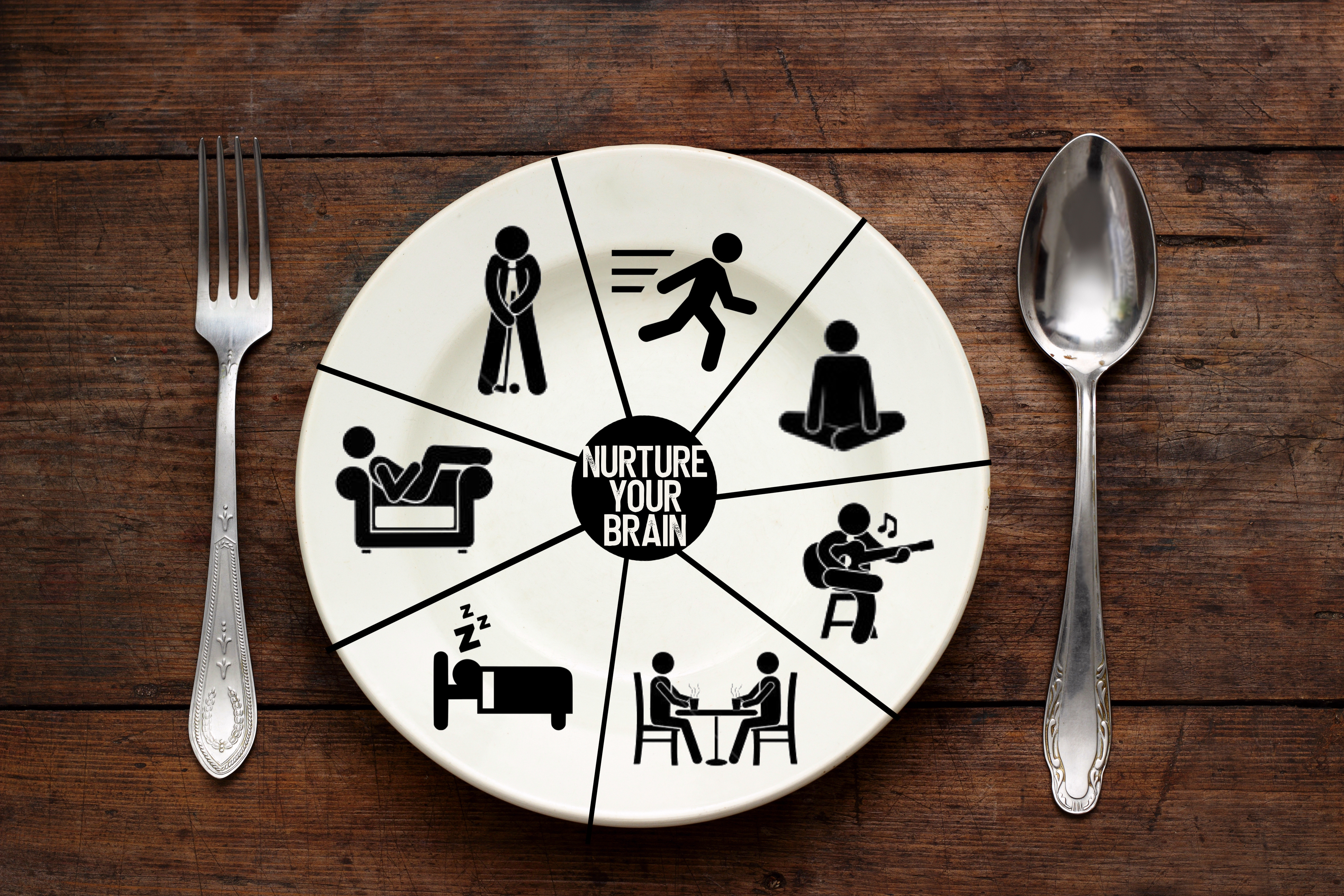
So it is no surprise that I loved discovering the “Healthy Mind Platter” developed by David Rock & Daniel J. Siegel, M.D.  It was discussed in Sissy Goff’s newest book “Raising Worry-Free Girls“.  It makes sense, especially as we increase our understanding of how connected our neurological health is to every other aspect of our body & being.  Many of us were raised knowing we needed to pay attention to a healthy diet: a specific amount of grains, meats, fruits/veggies, dairy, etc.  But with a better understanding of our brains, comes an understanding of “diet” we are feeding our minds as well.  The creators don’t suggest a specific amount of time for each category, but the understanding is that each individual may have particular needs for their own health.   Each category comes with its own benefits, and our brains (& neuro-chemistry) respond accordingly in ways that help bring long-term health conditions that impact our entire being.  They’ve broken the categories into (in no particular order):

  • Physical Time (exercise):  Aerobic activity helps increase the oxygen levels in the blood, which contributes to brain health in important ways.  “Exercise releases endorphins, which are neurotransmitters produced in the brain that reduce pain.  Exercise also increases the serotonin…which is often known as the “happy Chemical” (Goff, 2019)
  • Time In (introspection/silent prayer/mindfulness): Reflect on what has happened, what is happening. This is time without screens on, where there is space to be aware. Time here could also be spent reading and/or writing.
  • Focused Time (learning/purposeful): This is time to grow or nurture a skill or study a subject.   This helps build focus and makes or strengthens new connections in the brain.
  • Connecting Time (in-person/ eye-to-eye contact): Especially in a “virtually connected” world, this can be important for social development, as well as neurological health.  At every age, our “mirror neurons” help contribute to our understanding of others, our ability to be compassionate, and even our self-understanding through the eyes of others.
  • Sleep Time: Healthy and consistent sleep patterns are more valuable than our production/profit-driven world often gives credit for.  This gives our hippocampus time to process memories into long-term storage, restore and organize thoughts/feelings, and reminds us spiritually that we’ve been “set free” from the brick-making patterns of Egypt.
  • Down Time: When’s the last time you let your mind wander in a healthy way?   To gaze into the falling leaves, watch water flow downstream, enjoy watching the kids play nearby, or simply lay back on the couch breathing slow?  When your mind (or the kids) say “I’m bored” – let it be cause for celebration, in our overstimulated world.  It allows time for recharging the brain’s batteries, inspires creativity, and allows contemplation.
  • Play Time: Not practicing an athletic ability, but truly “playing”.  Here we have the opportunity to exist with lowered stress levels, build problem-solving, and remember to exist child-like.  Go mini-golfing, play Chutes & Ladders, bust out the old Atari, forget who wins, and enjoy the game itself.

You can follow the links or read the books to dive deeper into any of this, but I wanted to share it simply here.  We are called by Jesus to “Love the Lord your God with all of your heart and with all your soul and with all your strength and with all your mind.” (Luke 10:27)  I hope and pray that growing in these areas will help me to be faithful with what God has given me, help me to improve as a father, as a pastor, and as a friend.  May these things be a blessing to you as well…