Posted in Different Learning, Different Scriptures, Uncategorized

do you mind?

What did you choose to wear today, or eat for lunch? Who did/will you choose to marry, or what did/will you choose as an occupation? Did you actually choose these things, or were you simply following a pattern pre-determined by the multifaceted details about the body/brain/family/time you were born and live within? You may or may not know – some neurologists have tried to make a case against “Free Will”. As a firm believer in the healing importance of confessing our agency, I want to offer a few thoughts on the conversation.

In Deuteronomy 30:19-20, we read “I call heaven and earth to witness against you today that I have set before you life and death, blessings and curses. Choose life so that you and your descendants may live, loving the Lord your God, obeying him, and holding fast to him, for that means life to you and length of days, so that you may live in the land that the Lord swore to give to your ancestors, to Abraham, to Isaac, and to Jacob.” We are given a choice. Similarly, in Galatians 5:16-17, “Live by the Spirit, I say, and do not gratify the desires of the flesh. For what the flesh desires is opposed to the Spirit, and what the Spirit desires is opposed to the flesh, for these are opposed to each other, to prevent you from doing what you want.” Even living as a follower of Jesus is not something we assume happens “automatically” when we believe, taking away our sense of agency. Paul writes imperatively, “live by the Spirit”, because there is the option to do otherwise.

So where does the questioning of “Free Will” come from? As highlighted well in the enjoyable book “The Unthinkable Truth“, the newest fMRI brainscan technology has pinpointed areas of our thought processes in ways we’ve never before had access to. Based on recent research, scientists can identify by a brain imaging what decision a person will make up to 10 seconds before a person is aware of their own decision being made. Which is interpreted as “The choice is made before the person consciously makes the choice.” As Bouskila writes in his fictional story around genuine research, “..the bottom line of all these studies is that between the two options – you control your brain or your brain controls you – the latter is correct.” Many believe these newest studies affirm what Benjamin Libet implied in his 1980’s experiments on the conscious free will. Our brains make decisions for us, before we are even aware of a choice being made.

Thankfully, even among those who are interpreting these things to mean we have less agency than once imagined, there is an openness to unpredictability. Recently, neuroscientist Robert Sapolsky has written, “Will we ever get to the point where our behavior is entirely predictable, given the deterministic gears grinding underneath? Never—that’s one of the points of chaoticism. But the rate at which we are accruing new insights into those gears is boggling—nearly every fact in this book was discovered in the last fifty years, probably half in the last five.

In the midst of all these things, our world is also watching the rise of artificial intelligence, and many are questioning the difference between a computer, and the human mind. Can consciousness be fabricated? If not fabricated, can it at least be transferred? Philosopher Christof Koch writes, “Computational functionalism is a widespread article of faith in Silicon Valley and the tech industry. From this point of view, the whole-brain simulation of your brain will possess your mind, or at least a fair approximation of it, and will be conscious. The integrated information theory of consciousness takes a starkly different approach. It argues that consciousness is not a type of computation but is fully and completely specified by the unfolded causal powers of the system upon itself, whether a brain or a computer.

Echoing Koch, neuroscientist Peter Ulric Tse reminds us our brains are not simply machines meant to do supercomputing. They are unique and non-reproducible, no matter how improved our “artificial intelligence” (which are mostly just Generative LLMs anyways) may become. As helpful as technology might be (ethics of regenerating using unique creative content aside), we have capacity as human beings that no machine will ever be capable of. This capacity is retained even with current debates of our “free will”. Tse writes, “..my journey into issues concerning the maximization of human liberty began with my efforts to escape the faulty metaphor of the brain as a computer, and place meaning rather than information at the center of what brains, minds, and consciousness are for.” Tse sees current research into calculating when a particular decision was made, and maintains that no matter when or how a decision is made, a foundation of our humanity is our creative freedom and imagination. He writes, “We can strive to become a self that we imagine, thereby choosing to become a new kind of chooser operating in a new kind of world of our own choosing.

All of this echoes recent writing by Jim Wilder in his book “Renovated”, where he takes some familiar content by Dallas Willard and makes new contributions toward the healing transformation God desires through attachment. Many people find it difficult to “become a Christian” by simply adopting new beliefs or assenting to a particular new Truth. I believe this is why God has invited us to experience healing (often called “salvation”, in the eternal sense) in an intentional community (Church) of loving relationships, and in loving relationship with our Triune God. Wilder writes, “The ability to choose (will) is a very flimsy cortical function located on the outside of our brain…attachments (relational identity), at a brain level (beginning in the brain stem) create an identity that operates faster than conscious thought.” To put it simply, as others have written, “We are transformed more by what we love, than what we think.”

All of this is to say, as new research might emerge about when our brains decide something, or what computers might be capable of – remember that you are uniquely able to exist as you today. You are capable not only of sensing, but of discovering the meaning behind what you sense, and the mutual accountability of discovering that meaning with others. You are capable not only of deciding based on what you see, but based on the future realities you’re able to imagine prayerfully together with the Holy Spirit. You’re invited to confess the choices you had agency in making (James 5:16), repent (turning away & having a changed mind), being set free from past narratives by the authority of Jesus, so that together in a community of beloved others, we can collectively experience healing restoration and transformation toward a New Creation God has already begun in the resurrected Jesus Christ.

This is literally the super-natural becoming our new natural. I am thankful for the healing that has come already, and looking forward to how His healing continues to arrive personally, communally, and universally.
Posted in Different Learning, Different Thoughts

shortages

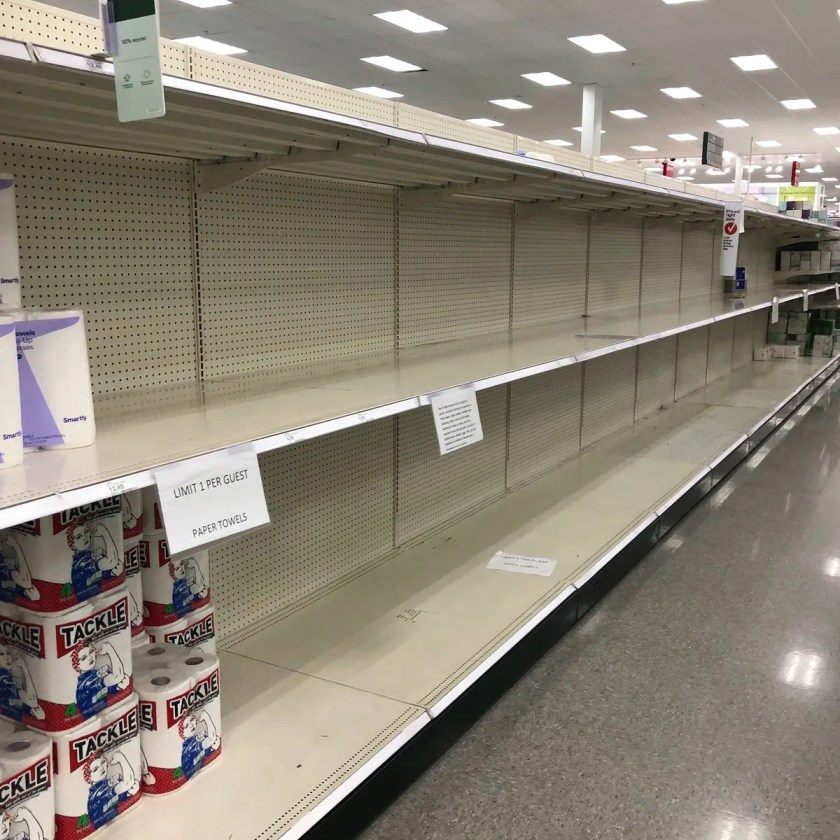
As we were living in Hungary, one thing we could not miss when watching international news coverage, was the fascination and humor most of the world watched with as the United States somehow panicked for the last remaining rolls of toilet paper. It was mind-boggling to us, as we’d never seen such a scramble for the white rolls of bathroom tissue. Surely it was just being over-dramatized, we thought. Perhaps this is just happening in the large cities. But as we talked with friends, and checked online, we saw that the strange phenomenon was happening widespread, even as most people confessed to being mystified by it themselves. Even as it was happening, memes popped up and late night talk show hosts made fun of…well….Americans who seemed to find comfort when facing the unknows of a pandemic with the dependable reality of knowing we could at least “take care of business” through it all.

Since returning to the US, it does seem like “Shortages” continue to pop up in the news. It doesn’t even take someone with a conspiratorial eye, to begin to wonder if many of these are simply well-placed advertising campaign strategies. But some legitimate shortages (most recently, Maple Syrup in Canada or Cream Cheese in the US) are still causing people and companies to think strategically, or to alter plans for consumption altogether.

Some might say that the reason Western Culture seems to notice “shortages” in ways that seem newsworthy, is that many of us have grown up or become accustomed to knowing that pretty much every “commonly-used” product we could imagine was readily available somewhere within a drive or an online order. It hasn’t taken long for this to impact our kids as they grow – with Christmas lists that often show no known limitations or boundaries. There are aspects of this we can be proud of – whimsical notions of “anything is possible” that we believe is healthy for our children as they grow. But it can also create a false sense of reality that most of the world still does not experience. Most places in the world continue to live with limitations, (and we do, if we’re honest enough to confess it), and that does not always mean a negative thing.

Now toilet paper is in a very unique category of “things I really hope we don’t have to learn how to do without.” But there is a sense in which limitations, and shortages, should be embraced a bit more readily as a positive path to spiritual growth as they come.

We live in a giant world with changing seasons, shifting climates, varying cultural backgrounds, many geographic features, and challenges as we tend to sowing and harvesting products in ways that justly care and provide for all of those involved. With so many variables, we should have limitations. We should have some foods that are only available in certain seasons. We should be thankful for what we can attain easily, and have a bit of wonder about what they have in other areas.

One of the beautiful aspects of Advent, is that we not only imagine what it was like to anticipate Jesus arriving for the first time, we imagine what it will be like when Jesus arrives fully. When Christ is revealed finally to be Lord over all things, and the Love of God swallows up all the cosmos, bringing together Heaven and Earth like never before – all things are made New. In those days (yet to come), there will be a growing shortage of shortages – as the full provision of God and His Good creation are revealed as enough (and also our hungers and consumption are brought into full alignment with His good and pleasurable ways).

In response to remembering this, we can celebrate in many ways. I would highlight two today:

  1. When possible, we can order/purchase something simple that doesn’t seem like it should be available to us because of season or location. Enjoy it on purpose, and share it with a friend, neighbor, co-worker, or child – imagining with them the coming age when all necessary things will be available and provided by Lord Jesus right on time.
  2. Purposefully choose to limit yourself of something. Sure, it may be at the store – but it’s not technically in season, or you’re not sure of the just working conditions/pay for those who labored. Choose something that you purposefully will “go without” this year. If it impacts the lives of others, don’t get all preachy – but if it involves kids – explain to them why you’re choosing to go without. Talk about being purposeful in our anticipation of the day when all that we need will always be provided – and not only us, but those brothers and sisters all over the globe.

No matter how we respond to Advent in particular, may we Christ-followers be leaders of the Way when it comes to responding to product shortages with peaceful confessions of our limited resources. We should not be surprised, and should be among those who generously seek community-beneficial adaptations when such shortages impact those around us.

May the peace of God who has already begun providing everything we truly need, fill and dwell in our hearts – and arrive through us as we share life together in community…both this Advent, and into the new year…

“But strive first for the kingdom of God and his righteousness, and all these things will be given to you as well.” – Matthew 6:33

Posted in Different Books, Different Learning

With All Your Mind…

Long ago, I discovered the spiritual connections and benefits of staying connected to neurological research.  Many of the same things have continued to provide helpful connections in personal devotionyouth ministry, and as we’ve grown in areas of parenting, and especially parenting a child who had experienced trauma before arriving in our home.   It doesn’t make us experts, and these are not magic, but they certainly help give us a better understanding as we seek to be faithful with all God has given us.

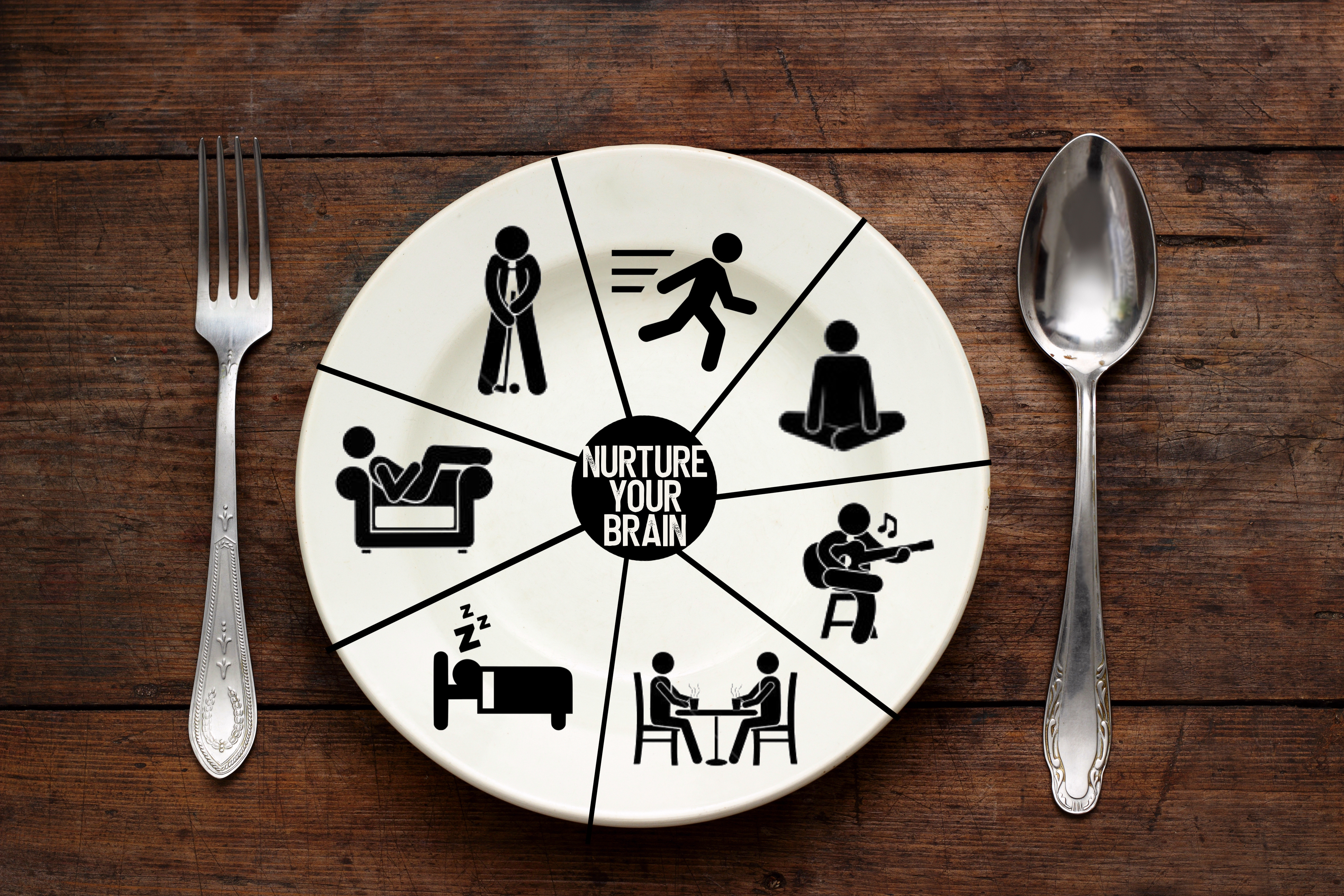
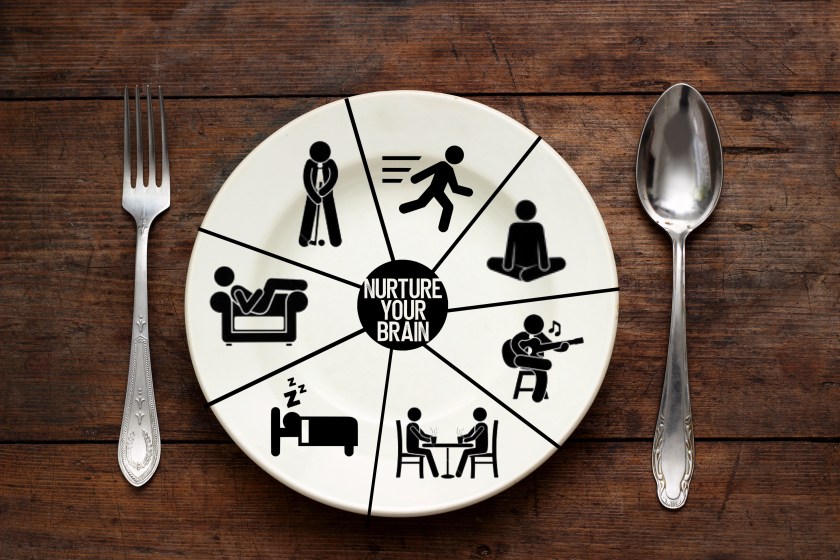
So it is no surprise that I loved discovering the “Healthy Mind Platter” developed by David Rock & Daniel J. Siegel, M.D.  It was discussed in Sissy Goff’s newest book “Raising Worry-Free Girls“.  It makes sense, especially as we increase our understanding of how connected our neurological health is to every other aspect of our body & being.  Many of us were raised knowing we needed to pay attention to a healthy diet: a specific amount of grains, meats, fruits/veggies, dairy, etc.  But with a better understanding of our brains, comes an understanding of “diet” we are feeding our minds as well.  The creators don’t suggest a specific amount of time for each category, but the understanding is that each individual may have particular needs for their own health.   Each category comes with its own benefits, and our brains (& neuro-chemistry) respond accordingly in ways that help bring long-term health conditions that impact our entire being.  They’ve broken the categories into (in no particular order):

  • Physical Time (exercise):  Aerobic activity helps increase the oxygen levels in the blood, which contributes to brain health in important ways.  “Exercise releases endorphins, which are neurotransmitters produced in the brain that reduce pain.  Exercise also increases the serotonin…which is often known as the “happy Chemical” (Goff, 2019)
  • Time In (introspection/silent prayer/mindfulness): Reflect on what has happened, what is happening. This is time without screens on, where there is space to be aware. Time here could also be spent reading and/or writing.
  • Focused Time (learning/purposeful): This is time to grow or nurture a skill or study a subject.   This helps build focus and makes or strengthens new connections in the brain.
  • Connecting Time (in-person/ eye-to-eye contact): Especially in a “virtually connected” world, this can be important for social development, as well as neurological health.  At every age, our “mirror neurons” help contribute to our understanding of others, our ability to be compassionate, and even our self-understanding through the eyes of others.
  • Sleep Time: Healthy and consistent sleep patterns are more valuable than our production/profit-driven world often gives credit for.  This gives our hippocampus time to process memories into long-term storage, restore and organize thoughts/feelings, and reminds us spiritually that we’ve been “set free” from the brick-making patterns of Egypt.
  • Down Time: When’s the last time you let your mind wander in a healthy way?   To gaze into the falling leaves, watch water flow downstream, enjoy watching the kids play nearby, or simply lay back on the couch breathing slow?  When your mind (or the kids) say “I’m bored” – let it be cause for celebration, in our overstimulated world.  It allows time for recharging the brain’s batteries, inspires creativity, and allows contemplation.
  • Play Time: Not practicing an athletic ability, but truly “playing”.  Here we have the opportunity to exist with lowered stress levels, build problem-solving, and remember to exist child-like.  Go mini-golfing, play Chutes & Ladders, bust out the old Atari, forget who wins, and enjoy the game itself.

You can follow the links or read the books to dive deeper into any of this, but I wanted to share it simply here.  We are called by Jesus to “Love the Lord your God with all of your heart and with all your soul and with all your strength and with all your mind.” (Luke 10:27)  I hope and pray that growing in these areas will help me to be faithful with what God has given me, help me to improve as a father, as a pastor, and as a friend.  May these things be a blessing to you as well…