
Posted in Different Moments, Different Scriptures, Different Thoughts, Uncategorized

a true story.

We ducked down a bit in the large passenger vehicle, trying to make it seem like it was no big deal. Our hearts were beating so fast, but we’d been told to stay quiet. Everything needed to look as normal as possible. We had no choice but to trust our driver. He had taken side roads for as long as possible, but there was no side road available near a border crossing. Before resuming the large, slow flow of single-file vehicles, he pulled over to call his wife. We had very little knowledge of the local language, but we didn’t need to understand his words to hear his concern. He was smuggling foreigners (us) across a very tightly closed border. He was telling his wife he would check back in with her after we all made it safely through the checkpoint. None of us knew what to expect.
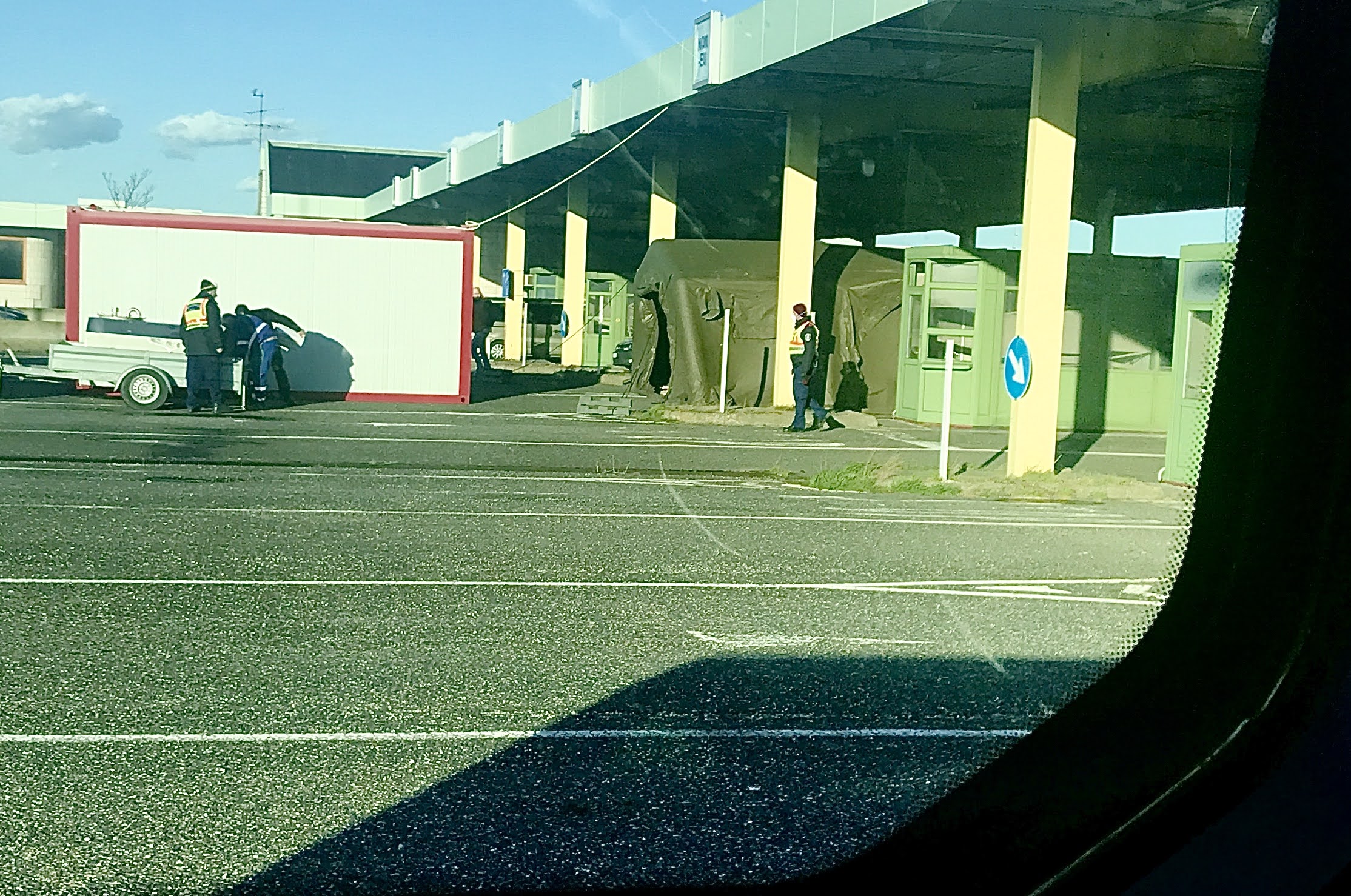
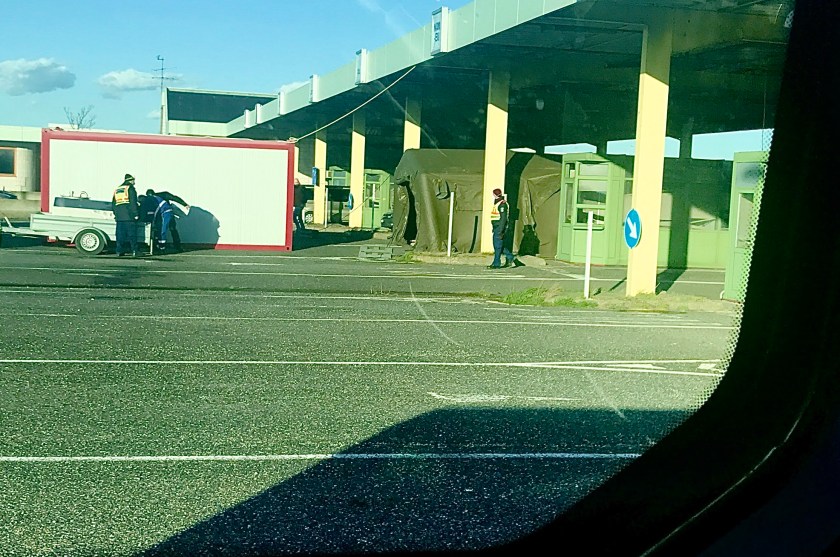
As we came closer to the border crossing, we saw the recently erected army tents. They were detaining any foreigners, even those with proper paperwork. We had heard stories of families being detained and separated into gender-specific last-minute accommodations. Countries didn’t have official responses ready for something like this. As a married father of 4 daughters, that would mean being separated from all of my family, leaving them alone in a country where none of us spoke the language, and one of us with brown skin. A country not always known for warmly welcoming immigrants. He collected our identification cards (in case they were asked for) and told us to keep quiet and to not make eye contact with anyone. “Some of you pretend to sleep.”

It was March 2020, and we were returning to our Missionary work in Hungary from what had been a short trip to celebrate my wife’s birthday in Paris (European travel is VERY cheap when you’re already in Europe!). But while we were gone, new concerns over something called the “Coronavirus” had caused panicked countries globally to close their borders over safety concerns. We were legal, temporary residents of Hungary. Most of what we owned in this world was there, in our apartment, including our family cat, Toby. But legally, at that moment, we were unwelcome foreigners. Those in the country were allowed to stay, but no one else was being admitted unless they were native-born.

We had arranged for a Hungarian man to pick us up from the airport in Vienna, Austria, and drive us the 45 minutes home to the city we were living in. It was only as we loaded our luggage into his vehicle at the airport that he realized the possible dilemma. He remembered seeing army tents being erected when he drove west into Austria, but didn’t think much of it. In that airport loading zone, looking at his American passengers, a family in need, he made a quick decision to help us. I don’t even remember his name, but even now I’m thankful, and I pray God blesses him.

I remember what was probably a 5-minute stop, feeling like hours. Soldiers approached our vehicle. I remembered our time in Congo, caring for our daughter, and eventually being able to bring her home. We’d seen soldiers before. But our daughters were fairly young and untraveled, and seeing the armed soldier after hearing our concerns talked about openly, I can only imagine how they were feeling in that moment. We prayed quietly, holding hands unseen. We looked down at the floor mostly, quietly stealing glances at the men in the front of the vehicle, talking back and forth with soldiers. We couldn’t understand their words, but he gestured back at us once or twice. It sounded like small talk, and our driver kept his cool. Finally, we were given the thumbs up, and as the vehicle ahead of us drove forward, we were allowed to follow. We entered the country, and after a few moments of tense silence, our driver celebrated aloud. He congratulated us, saying he had just officially declared we were all Hungarian citizens. We all felt even more relieved than his voice sounded as he called his wife to tell her all was well. We were on our way “home”.

Immigration is an issue. Immigrants are people.” These words were repeated over and over when I was studying to pursue my Immigration Law Paralegal status back in 2016. As part of my “MDiv”, I’d taken a course on Multi-Cultural Ministry, and the paralegal work was offered as an additional opportunity. As a pastor, I could not represent someone in court, but I could understand the law better and help fill out the required paperwork. Life and work have taken us in new directions, and I haven’t kept up my training. But I’ll never forget the heart of Jesus I discovered volunteering with local immigration lawyers, and learning how the issues were impacting individuals and families. It’s a very broken system, in need of reform. (Example: Current processing time for a U.S. citizen to petition for their parent/child/spouse is over 60 months. 100+ months if you’re a permanent resident, but not a citizen. Can you imagine not living with your loved one that long?) People on both sides of the aisle are doing great work to ensure and promote that work continues…both for secure borders and to offer assistance to those in deep need.

All of it is a needed reminder: No one goes through these processes for fun. Especially given the climate of conversation (or lack of conversation) these days, who would want to sign up for the stigma and separation from loved ones that can come in these processes? Many do so because they are desperate for a new life, or feel forced on this path because, like us, heading back into Hungary, they feel it’s the only option, and worth the risk. The story I shared was nothing like what so many people face, risking everything for the chance, not just of a “better life”, but of a continued life in struggle, compared to a known risk of death on other paths.

Lately, it seems like those on both sides of the political extremes are launching anger at the other. Anger toward and dehumanizing those who desire safety and are working to secure borders to protect their future and their children. Others have anger toward and are dehumanizing those who desire to cross or remain within secure borders to protect their future and their children. Politicians at the top of both sides are moving pawns around, whether angry protestors or angry ICE agents, to make their points and secure future elections, without assessing the human costs involved for those suffering on the front lines.

Jeremiah 22:3 “This is what the Lord says: Do what is just and right. Rescue from the hand of the oppressor the one who has been robbed. Do no wrong or violence to the foreigner, the fatherless or the widow, and do not shed innocent blood in this place.”

I don’t have a solution. But I do agree with those calling for prayer. Calling for dialogue. Calling for greater amounts of listening. Slowing down our responses to increase safety and discernment. Calling for both sides to regard the preciousness and the humanity of those they currently see only as an obstacle to accomplishing their own goal. Lord Jesus, help us in these moments. Protect the vulnerable. Give us wisdom, and help us to move forward guided by Your Spirit, with Your Kingdom as our foundation.

Posted in Different Scriptures

from the furnace…

(Read Daniel 3:24-30 first)

Whew. Even though we knew what was going to happen, it’s such a relief to arrive at this point in the story. Notice how often all 3 names of the men are used (Babylonian names that give credit to false gods, instead of their Elohim-honoring Hebrew names). As Israel passes on the story, they’re remembering the names (and truths) Babylon attempted and failed to declare. It’s a reminder to God’s people living in exile across all time – the faithfulness and authority of Elohim remains, even when Babylon seems to have renamed reality.

The passage begins with Nebuchadnezzar being astonished/alarmed, and rising up quickly. He asks for confirmation of reality, because what he sees does not match what he knows to be true.

When’s the last time what you perceived did not match what you knew to be true?

Often what we know to be true is due to the perceptions we’re used to using. We build our conceptions of reality based on what we can see, hear, and sense. We base our expectations off what we’ve experienced previously.

Because of that, it’s so important to exercise our imagination with God regularly. We are Kingdom citizens who know Jesus is on the throne already. We know Love is the language of this new Kingdom, and forgiveness is possible because of how we’ve each been forgiven. But so often we forget these realities, because of what we see and hear and perceive as reality in the world around us. So we meet regularly for worship and the Word each week. We draw together during the week in relationship and prayer, to encourage one another. We need these moments of being formed in the unseen realities of the Kingdom becoming visible through us.

God’s realities are being revealed as Nebuchadnezzar looks into the furnace. This is often the purpose of God doing something miraculous like this. Not to preserve the lives of these 3 young men indefinitely. Eventually, they all end up dying. We’re not even sure what happens beyond these moments. But in these moments, all Israel is given a vision they needed to see in the midst of their exile (or return from it). Every miracle (including the miracle of being the body of Jesus as the local church) is a window through which we glimpse the realities of God’s Kingdom. Every miracle is an apocalypse (literal meaning: an uncovering, a revealing).

I want us to focus on a few particular things, as God gives us here an apocalypse, a window into His Kingdom realities through this passage…

  1. There were four men. Nebuchadnezzar asks for confirmation – “We threw 3 guys in there, right?” He sees four men, and the fourth he describes with words that mean “he looks like a divine being”. Some believe maybe this was Jesus who came physically even before he was born to Mary. Others believe it was an angel. No matter who, it was the presence of God with these 3, and in a way that was embodied. The Kingdom of God is revealed as physically and relationally present in suffering.
    Surely, they would have been happy just to not be burned alive. They would have known God’s protection was with them. But the way of God’s Kingdom is to be physically with those in suffering. As a church, it’s good and responsible stewardship for us to send financial support to organizations that do good to alleviate suffering in our community and world. But it’s the way of the Kingdom for us to go out into the lives of our neighbors, and join them in their moments and areas of suffering as the embodied presence of Jesus.

2. They were unbound – even in the fire.
In verse 21, they bound the men. Once again, I’m sure the men would have been incredibly happy simply to not die in the fire. But God desires to go a step further here, revealing something important about the ways of His Kingdom: Sometimes instead of delivering us from the fire, God delivers us in the midst of the fire.
Remember the story of Jesus on the boat with His disciples? Matthew 8:24b says, “But Jesus was sleeping.” In a panic, they woke Him up afraid they were all going to drown. It’s true, Jesus could have helped them avoid the storm in the first place. Just like He could have healed Lazarus before He even died. But for whatever the reason, sometimes God brings His peaceful presence through us right in the midst of the suffering and storms. You may be living in a situation, or experiencing a furnace that cannot be changed right now, or that you cannot see a way out of. My prayer is that even now you would find comfort, knowing God can bring you freedom even in the midst of the furnace.
I can’t explain the mind of God, but I do know that if God always rescued us from having to be in storms, or be in fires, or experience death….we might continue to fear these things as if they were something that held power. Which leads to our 3rd point.

3. The fires of Babylon had no power over them.
It’s interesting the story doesn’t just say “they weren’t burned”. It doesn’t say they weren’t hurt, or stop with saying “they were saved from the powerful fire”. It very intentionally uses the phrase “the fire had not any power over the bodies of those men”.
As with many stories in scripture, this is not prescriptive, but it is descriptive. It’s telling us a story about this particular situation, where a miracle occurred in order to reveal something important about the ways of the Kingdom. The revelation here is that even the dangerous forces of the empire have no actual power or authority over someone who is set apart for God’s purposes.
This does NOT mean you will not get burned! That’s what we mean by being “descriptive”. It’s describing this particular story, where a window was opened to see how the Kingdom works. God’s authority is more powerful than anything the forces of empire might attempt.
Last week I smoked pork chops. Even smoking pork chops, when I came inside I smelled wonderfully like smoked meat. After washing my hands, that night I remember smelling it on my arms before going to sleep. It seems a bit unnecessary for God to keep these men from even smelling like they’d been in the fire. So why include that detail? Why go to that great length?

There’s no secret Ancient Near East meaning for the smell of fire, and there’s nothing obvious theologians agree on here. But it does show us the extent of God’s power in ways that might speak to something we’re aware of today – the impact of suffering. Sometimes referred to as “trauma”, even if we survive a difficult moment these days, it stays with us in ways we are still learning to understand. The power and authority of God revealed in these moments show us He is even able to deliver us from any ongoing impact of these furnace moments of life. What furnaces have you gone through in your past, where the smell of that fire hangs with you? It’s no longer an active presence of a threat, and yet you continue to walk around as if the fire remains. Allow the truth of scripture today to invite healing, or even the hope of healing. God is not only able to deliver us from the furnace, but from any impact the furnaces of our lives have left on us.

Nebuchadnezzar makes a decree including, “There is no other god who is able to deliver/rescue/save in this way.” This is a defining nature of God, revealed with the same root word back in Exodus 3:8. In those moments, God reveals His desires for the people of Israel in ways that echo through the rest of scripture. “I have come down to deliver them from (sources of enslavement) and to bring them up out of that land to a good and spacious land, to a land flowing with milk and honey.”

God not only desires deliverance for you, but He has provided that deliverance. Not only from the furnace, but into His New Creation Life. By His Spirit, He transforms us as a community into a place/people where others might discover that same deliverance. A place where God becomes physically present with us and through us. A place where we become “unbound”, even in the fire. A place where we’re reminded – there is nothing with power or authority over us, but God himself.

Will you allow God to set you free? Jesus invites us to step forward into His freedom…

Posted in Different Scriptures, Different Thoughts

A Gathering of Thunder…

(Warning: Spoiler Alerts from the movie “Thunderbolts”. Do not read unless you’re okay with that.)

Confession: I enjoy Marvel movies. I grew up with the X-Men, and superheroes in general were always fun to keep up with. I don’t know them nearly as well as those who are well-versed in the comics. But I’m familiar enough to enjoy keeping up with the new movies. I also believe imagination and the arts are an important part of our prayer and spiritual life, so I’m always encouraging our girls to pay attention to where Kingdom Truths are being revealed or expressed in culture.

With all of this in mind, I thoroughly enjoyed the movie “Thunderbolts*” recently. If you’re a Marvel purist, you may not enjoy this post. But if you’re open to it, I believe the movie illustrates beautifully some important Kingdom truths, especially as we experience them in our present cultural deficits.

  1. Emotional Health is real, and a real need even (and especially) for Christians. In her role as a pastor, my wife is leading a group through the book “Emotionally Healthy Spirituality“. It has been a blessing to share the journey with her and others. Toward the beginning, Yelena shares advice with Bob to “stuff it down deep” to his question of what to do with the “emptiness”. An emotionally healthy person can be aware and respond authentically with self-regulation even to unpleasant emotions. Pretending everything is fine and peace exists, when there are real challenges or biological alerts that something is not okay, denies a major part of who God has created us to be. As we see toward the end of the movie, this creates a “shadow self” which is not our real and authentic self. We become focused more on controlling and manipulating both ourself and others without recognizing the humanity of anyone. In fact, (as illustrated poignantly in the “Dark Sentry” moments) we “dehumanize” others, displacing their authentic self, consuming them for our purposes in ways that leave them as isolated as we were feeling in the first place. As we do this, the darkness we thought we had “dealt with” grows – no longer within us, but demanding space out in the reality we exist in. Such a dehumanizing darkness continues to cause isolation, both within us from our true selves, but also between us and others (especially the most “otherly” of others), and between us and God.
  2. Our Goals are Dis-ordered. We see a collection of “dis-ordered” goals, in Ox Corp’s attempt to create the most powerful “super-soldier”, called “The Sentry”. He would be male, obviously, and have no weaknesses or limitations. So many of these same goals can be found woven through our society, especially as seen in our pursuit and use of technological advances. Andy Crouch does a great job highlighting these pursuits in what he calls “the Magic”. The goal is to maximize productivity (profit/power/etc.) with minimal effort, and disregarding the human/environmental costs. We want to be as close to being “a god” as possible. We want to know everything, transcend every limit, and make anything we need or want accessible instantly (instant gratification). We want to be omnidesirable (I made up this word, but we want to be in a perpetual state of “camera ready” without vulnerable flaws or imperfections.), omniscient (have access to all knowledge in our pockets), and omnipresent (having internet capabilities connecting the globe wirelessly). We want to defend our ability to have and be these things so strongly, anyone who seems to stand in our way is no longer a person but an object – an obstacle to be removed in our pursuits. Jonathan Haidt has a bestselling book about how this cycle of anxious pursuit is unsustainable and dis-integrating. At several points in the movie, we hear a voice of reason questioning these goals being pursued without regard for the persons involved. Mel, who is Valentina’s assistant tries to point out the risks involved in offering limitless expectations to someone who is emotionally wounded, or at best very undeveloped. By offering all these divine-like promises of our culture to every child as young as they’re able to hold a screen/device – perhaps we’re doing the exact same thing?
  3. Healing comes in authentic relationship/community. Many books and podcasts are finally announcing what the research has been long showing us – to quote John Donne, “No man is an island.” I’ve loved the research being done by leaders like Dr. Curt Thompson, and the writing of Dr. Jim Wilder in areas of interpersonal neurobiology. There is so much healing available to us when we purposefully pursue vulnerability in committed community with a small group of others. We’ve “discovered” what God revealed in scripture long ago – we are made in the image of a Triune God who literally IS relationship (and invites us to exist within that relationship), revealed in Jesus Christ. We cannot exist in healthy or redemptive ways in our isolation, or in the false versions of community most of us settle for provided by social media. “Media” means “in the middle”, and so we’re reminded that a “mediated presence” through technology is not an embodied presence. It can be a helpful tool at times, but should never be seen as anything more than a supplement or liminal space to actual in-person relationships wherever possible. When God wanted to invite us back into restored relationship with Him, He was not content to send a message to us, or even appear in the clouds. He came in the flesh, walked among us, and invites us to “become His body” by the power of the Holy Spirit still today. This is what every local church seeks to be, as our specific/temporal expression of the Church across all time and space. This is our hopeful and redemptive path of response to all the “darkness/isolation” caused by turning away from God in the first place (see Genesis 3).

Just as Yelena was encouraged, we are those who “shine the light” in response to darkness (John 1:5). We do not attempt to do this on our own, but together with others. We live in this direction humbly, confessing our faults to each other, and being loved/restored each time – as we grow in the direction of more readily being those with strong attachments to our God who is Love. This will take grace, in every direction. This will take practicing forgiveness and reconciliation as an act of tangible love, even and especially where it doesn’t make sense according to the world. When this happens invitationally, even those who thought they were completely lost to darkness already can be integrated into the healing community sourced in the Holy Spirit sent by Jesus Christ. Not only integrated, but becoming part of His living and ongoing invitation to all others to come and be soaked in the healing realities of Father, Spirit, and Son. That sure sounds like a great commission…(pun intended).