

In reading Bob Goff’s “Love Does” to our children recently, I was reminded of his words urging us not to be “Stalkers” of Jesus. He points out that we often spend so much time personally, and even in our gatherings studying about Jesus/Holy Spirit/God. But how often are we focused on simply “being with” this Triune God? As a pastor, as a father, and especially as one who recognizes the power of God’s Love – I want to consciously spend time, and invite others into times, of being increasingly aware of the fullness of God’s Love & presence.
Recently there was a book published that contains an amazing amount of scientists, researchers, and history of people all wanting to do something similar. The main title is “How to Change Your Mind”, and a conversation with the author on NPR caught my attention. As someone who’s studied biblical Greek, I remembered that Jesus often called people to “repent” using the word “metanoia” which literally means “having a changed mind”. The unpopularity of this book in Christian circles might be caused by its subtitle, “What the New Science of Psychedelics Teaches Us About Consciousness, Dying, Addiction, Depression, and Transcendence”. The awkwardness of my  preconceptions of psychedelics pushed-aside, I went ahead and read it anyways.
Wow. The history of these substances and the opportunities for research beginning to resurface has a great deal to offer the brokenness of humanity. Researchers are just in the past 8 years, finally and slowly/clinically, beginning to proceed cautiously again. There are potentials in treating addictions, anxiety/depression, PTSD, and a great many of maladies in between. Unfortunately, many of these substances were misused/abused in unsafe ways/levels back around the ’60s, and so most of us have a cloudy understanding of all these things.
But most interesting to me were the accounts of the early scientists/philosophers/divinity students who experienced these substances simply as a way to experience an “altered state of consciousness”. Complete skeptics who viewed everything through a scientific lens came away skeptical of their own need to understand only that which is understandable. Religious people came away feeling as if they’d “finally” had an experience of the divine. There were so many great connections to those of us who are willing to see it, and I cannot process everything or share all the great quotes here. But one thing in particular screams to be noticed:
“What is striking about this whole line of clinical research is the premise that it is not the pharmacological effect of the drug itself but the kind of mental experience it occasions – involving the temporary dissolution of one’s ego – that may be the key to changing one’s mind.” Michael Pollan, How to Change Your Mind
It doesn’t take a Bible scholar to see the connection here. Pick a verse! Look at Ephesians 4:22-24 if you need one. Scripture talks about “dying to self” in order to come alive with the New Life of Jesus Christ over and over again. Followers of Jesus since ancient times have wrestled with and expanded on what all of this involves.
What happens in story after story throughout Pollan’s book (the “good” trips at least) are individuals who carve out time and space purposefully for an “otherly” experience. They are talked to by a “guide” who comforts them, and reassures them of their presence. They close their eyes, turn on some music, and are guided verbally while the substance takes its effect. Once you shed some of the hallucinatory aspects, what often leads to transformation/healing in the individual is coming away from such an experience aware that an “other” way of existing is out there. An immediate realization of a unity that flows through all of creation, and the beauty of color, sound, etc.
“One of the things that commends travel, art, nature, work, and certain drugs to us is the way these experiences, at their best, block every mental path forward and back, immersing us in the flow of a present that is literally wonderful – wonder being the by-product of precisely the kind of unencumbered first sight…” Michael Pollan, How to Change Your Mind
This is not too far off from experiences we’ve heard of happening in worship. This is not too removed from experiences of “guided prayer” even I have helped lead others into/out from. It reminded me of another book I’d read recently, “Merton’s Palace of Nowhere“. Merton has written extensively on prayer, on dying to the “false self”, and on meditation. He was even around during many of these early 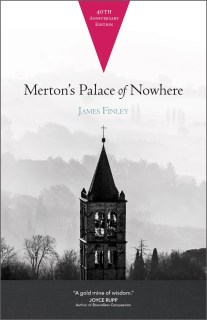 “trials” in the 60’s, so I wondered his perspective of these things. In a letter from December 1965, he writes:
“..my impression is that they are probably not all they are cracked up to be. Theologically I suspect that the trouble with psychedelics is that we want to have interior experiences entirely on our own terms. This introduces an element of constraint and makes the freedom of pure grace impossible. Hence, religiously, I would say their value was pretty low. However, regarded merely psychologically, I am sure they have considerable interest.” Thomas Merton, The Hidden Ground of Love
I find myself agreeing with Merton. The grace of God that arrives in our moments/lives of sacrifice and other-centered Love is not something we can carefully plan for/measure. They should not be contained in a moment or require the assistance of substances. Even the neuro-chemical responses of emotional worship experiences can be addictive in ways that make us desire more of those moments on terms we can manufacture.
“Only when we are able to ‘let go’ of everything within us, all desire to see, to know, to taste, and to experience the presence of God, do we truly become able to experience that presence with the overwhelming conviction and reality that revolutionize our entire inner life.” James Finley, Merton’s Palace of Nowhere
It’s not as simple as saying “Drugs are bad, mmkay?” But it is as simple as saying an authentic and sustainable experience of God that transforms and brings New Life is possible for anyone, anywhere, at any time. We live within a creation that proclaims the awe-inducing beauty and goodness of God,. We are surrounded by a fellow humanity that was created to bear the image of the Divine. God is not so far away as we often imagine. The divine invitation to repent, to “metanoia” (have a changed mind) is something we do not seek to control, but submit ourselves to by pausing. We offer ourselves in unceasing and moments of prayer, and a life with patterns of Sabbath.
To put it another way, we “come away/apart” or “retreat” to a solitary place as Jesus did, but also in moments joined together in relationship with others. We prayerfully and vulnerably confess our false selves and seek to live in ways that shed/deny that self for the sake of others. In living with these patterns, embracing people and moments with the precious validity of what could be (rather than what we assume will be), we position ourselves to receive the grace of a God-given Now.
On a closing note, I do believe these substances are able to “force individuals” into an awareness of the Divine (though not always). However, we don’t need a substance in order to reveal to us different ways of perceiving this world exist. What Jesus invites us to recognize is the power of compassion to accomplish even more. Compassion means literally “to suffer with”. When I choose to enter into the sufferings of another (person, people group, etc.), my vantage point enters into their own. When this happens, we experience a “metanoia” that empowered by the Holy Spirit can lead to freedom from the chains we’d previously been bound by. From a Christian perspective – when I “die to self” to come alive as Christ, I enter into a Holy Spirit-sourced compassionate life for those whom Jesus Loves (everyone…yes, even/especially them). Such a life is the arrival of New Creation, where former things (false self) have passed away and all things have become New. Not once, and not in a moment, but as a way of Life.
But beware. As anyone who’s traveled to a foreign country can affirm, a daily existence where everything is “New” can be incredibly exhausting both cognitively and physically. We may find ourselves depending on the power of God and needing to return to His presence…often…
…the Good News is, He is here.

 attempts at this are found in Genesis 3:7, as Adam and Eve sew fig leaves together out of a desire to cover up their true “self” which they’re shamefully aware has been marred. They want to be perceived without the humiliating nakedness and vulnerability, and so they put on leaves and say, “This is the image I’ve chosen to represent the ‘self’ I’m curating for you to perceive me as.”
 cake. Nothing incredibly fancy. Nothing that screamed “WOW”. Nothing that forced everyone around it to notice. Just, ordinary. Next, she snuck her cake right into the middle of a busy restaurant where food was being served left and right. An ordinary cake showing up in the middle of a buffet table was no big deal. She watched, and waited, as the first slice was taken by a small boy. She’d used the finest ingredients, and put a great deal of care and inspiration into her recipe. But on the surface, and looking at his plate – the boy saw a piece of ordinary cake just like any other. He hurried back to his table and sat down.
 words from wick