Posted in Uncategorized

so far…


I was hoping that the 3rd round of the Stanley Cup Playoffs would be a match up between Detroit and Chicago. It’s still a very real possibility.

But perhaps less of one.

Last night, both Detroit and Chicago fell behind in their Round 2 quest for the Cup. Both best-of-7 series are 2 games to 1 now, with Vancouver and Anaheim up. Vancouver played an intense away game in Chicago. They deserved the win.

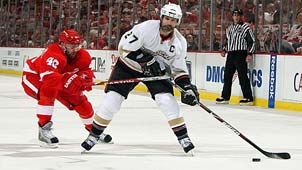
Anaheim, however, was dominated by the Redwings: puck possession, momentum, scoring chances, twice as many shots on goal, etc. They have only two reasons for last night’s win:

1. Jonas Hiller – seriously, this guy is a ridiculously good goalie. Kudos to him.

2. The 2nd Goal. The GAME TYING GOAL from the Redwings near the end of the game. It was in, before any whistle. But because an official lost sight of the puck, he thought the play was dead, and blew his whistle, announcing that he began to blow the whistle before any goal was made. Even the announcers declared it a horrible call. But it was made. The goal was not counted, and the Ducks won – 2-1.

So let’s try this again tomorrow night. I’ll be watching the game at Lock Stock & Barrel here in Decatur….who’s coming with me? I don’t care who ya’ cheer for….it’ll be a good time either way. Starts at 9:30pm. SEE YOU THERE!!!

Posted in Uncategorized

answer that matters…

(an excerpt from my ordination interview –
responding to the topic of ordination itself)

Ever since the early church, some people have been set apart for leadership roles. These people “bear witness to an inward call of the Holy Spirit.” Upon meeting certain requirements, and bearing fruit that witnesses outwardly of such a call, they are set apart publicly, now referred to as “ordination”. This was especially important in the beginning stages of the ancient church, as they struggled to remain true with so many pressures and false doctrines becoming confused with their own. It remains true to this day, with more and more ease of access, there are more modes of information/proclaiming both truth and confusion than ever before.

For much of my life, I was under the impression that ordination was nothing more than a public statement of something already going on. After all, the Church had already entrusted that person to accomplish ministry, and ministry had been happening. I saw it as simply “sealing the deal” in a partnership that already existed. I still can’t say for sure I understand exactly how it all works, and I know it’s not some sort of “super-power that gets activated” that was previously dormant.

But there is something to say about a world-wide denomination of believers collectively laying hands on, and blessing you as someone called to accomplish God’s redemptive Kingdom work in this world. At the same time as the blessing, there is a commitment to support, build up, encourage, follow, guide, develop, work together, care for, and be cared for by. This is an important aspect of developing a leader, and a milestone in becoming someone who is serving and leading towards Christ; whether as a head pastor, an associate pastor, or a lay leader providing support within a church body.

I am looking forward to it.
Posted in Uncategorized

questions that matter…

By the end of this week, I’m due to respond to each of these questions, in view of my upcoming interview for ordination. I thought it would be valuable at very least, to share with you the questions asked of potential Free Methodist Ordinands…(Nazarene ministry friends – any response? How does this match up to questions asked of ya’ll? I know it’s probably weird not seeing a huge emphasis on entire sanctification as a stand alone issue. 😉 )

  1. Explain your understanding of God. What Adjectives do you use to describe Him? How would you describe yourself in relation to God?

2. Speak to us about the sufficiency and authority of Scripture.

  1. Give an overview of your understanding of the salvation process—what John Wesley called the “order of salvation” from before faith to heaven.

  1. What are the key differences between a Wesleyan and Reformed view of salvation? In your answer, help us to understand and “own” a Wesleyan-Arminian perspective.

  1. In your own words, describe a Wesleyan understanding of sin and salvation, the work of the Holy Spirit, and the meaning of entire sanctification. How do you evaluate or relate to these understandings?

  1. How do the scriptures understand the church (its nature, composition, and mission)?

  1. What is your theology of worship? What are the essentials of the proper worship of God? How do matters of style and preference relate to the practice of worship?

  1. Describe your devotional life (methods, resources, etc.). What have you done recently done recently to keep your relationship with God alive and growing?

  1. What is your understanding of the NT teaching on the gifts of the Spirit? What is your specific position on “speaking in tongues”?

  1. How do you understand the role of the pastor? What are the pastoral essentials in caring for a congregation?

  1. Of what significance is ordination? Reflect on its meaning for the church, its mission and its pastoral and lay leadership.

  1. Our ordination ritual gives the scriptures and their witness to Christ a central place in our church. Comment on your intentions relative to the Scriptures and their place or role in your future ministry.

  1. What is your view of women in ordained ministry? How do you interpret the most significant Pauline directives regarding women in the church? How do you respond to the passages that describe women fully engaged in ministry with Paul and others? Please comment on Galatians 3:28 regarding there being neither “male nor female” as it applies to ministry.
  2. What is the responsibility of a 21st century pastor and a congregation to the Great Commandment and Great Commission? How do you envision leading a congregation in fulfilling the Great Commandment and Great Commission?

  1. What is your view of pastoral “authority”? What is your understanding of how a pastor works with and relates to the lay leaders and the Board of Administration of the congregation to which you are assigned in bringing change in mission, vision, or styles of worship? How do you relate to those in authority over you?